


You're standing in the treat aisle with two bags in your hands. One says beef flavor, another promises single-protein beef, and a third is filled with dark beef-liver pieces. Your cat would probably accept all three. You're the one left wondering whether “beef” describes the main ingredient, a seasoning, or just the marketing on the front of the package.
That question matters because beef cat treats differ in more than taste. Protein source, cooking or drying method, ingredient quality, calorie density, and portion size all affect whether a treat fits your cat's routine. Beef isn't automatically better than chicken or fish, and it isn't automatically unsafe. It's a category that rewards careful label reading and a little practical calorie math.
Table of Contents
- Why Beef Treats Deserve a Second Look
- What Counts as a Beef Cat Treat
- The Nutritional Reality of Beef Cat Treats
- Is Beef Actually Better Than Chicken or Fish
- How to Read a Beef Cat Treat Label
- Feeding Beef Treats Without Unbalancing the Diet
- Sourcing and Quality Signals Worth Checking
- Quick Answers for Concerned Cat Owners
Why Beef Treats Deserve a Second Look
The word beef can mean several different things on a treat bag. It may describe a single-ingredient piece of beef, a recipe containing beef alongside poultry, an organ blend made from beef liver and heart, or a flavor added to a snack whose main ingredients are something else.
One retail example illustrates the problem. A beef-flavored cat treat can begin with chicken by-product meal and ground corn, followed by animal fat, dried meat by-products, natural flavors, and natural beef flavor. In that case, “beef” helps describe the flavor profile, but it doesn't mean the treat is made primarily from beef. You can inspect that example in this beef-flavored cat treat listing.
The four questions that matter
When I read a treat label, I don't begin with the front-of-pack promise. I ask:
- What animal protein is first? Is it beef, beef meal, a poultry ingredient, or a general meat term?
- How was it processed? Freeze-dried, air-dried, baked, and soft treats have different textures and often different moisture levels.
- How concentrated is it? Removing water can create a small, rich treat that contains more calories per gram than its size suggests.
- What job will it do? A reward used during training needs easy portion control. A topper needs to remain occasional. An organ-heavy bite may be too rich for a cat that needs a simpler option.
The safety question deserves attention, too. The CDC's pet food safety guidance says raw pet food and raw treats can make cats or dogs sick and specifically doesn't recommend feeding raw pet food or treats. Raw or undercooked beef treats therefore require particular scrutiny around cooking temperature, handling, and manufacturing controls.
Practical rule: Treat “beef” as a starting point for investigation, not as proof of what's inside the bag.
The useful decision isn't “Which beef treat is best?” It's “Which format has a clear protein identity, a sensible calorie profile, and a portion I can manage for this particular cat?”
What Counts as a Beef Cat Treat
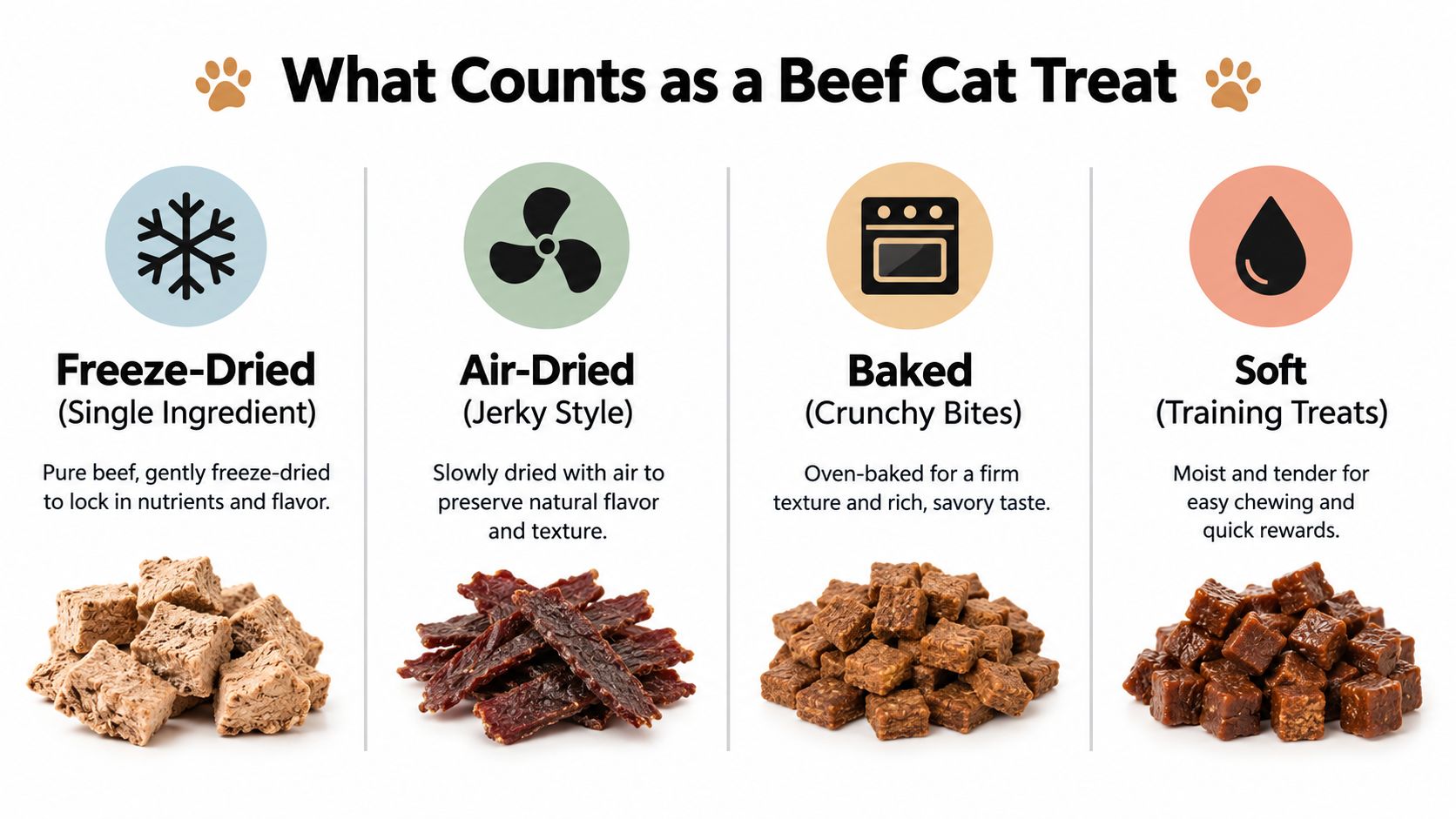
A beef cat treat is any supplemental snack in which beef supplies the main taste, a meaningful ingredient, or the animal protein used in the recipe. That broad definition includes very different products, so the label needs to tell you which type you're buying.
Four common formats
Freeze-dried pieces usually contain concentrated meat with much of the moisture removed. A short ingredient list may include beef muscle and organs such as liver, kidney, or heart. These pieces can crumble over food, but their compact size makes it easy to underestimate how much you're feeding.
Air-dried strips resemble jerky. They may be made from sliced muscle meat or a formed mixture, and they're often easy to break into smaller rewards. Check whether the label identifies the cut and whether other proteins, binders, or flavoring ingredients appear further down the list.
Baked crunchy bites can contain beef meal, grains, starches, fats, or flavor compounds. Crunchy texture doesn't tell you how much beef the recipe contains, so the ingredient panel matters more than the shape.
Soft treats are useful for quick rewards because you can often divide them into smaller portions. Their softness may come with added humectants, fats, or other ingredients, making the guaranteed analysis especially useful.
What the wording signals
- Beef: Usually identifies beef as an ingredient, but the full recipe determines whether it's the dominant protein.
- Beef flavor: May describe a palatant rather than a substantial amount of beef.
- Beef broth: Adds a beef-derived liquid ingredient and taste, but doesn't establish that the treat is meat-dense.
- Beef meal: Describes rendered, concentrated beef tissue. It can provide protein, but the label may not clarify the exact mix of tissues.
- Beef by-product: Can include parts such as organs. That isn't automatically poor quality, but the wording is less specific than a named cut.
A treat made from beef, beef liver, beef kidney, and beef heart is different from a crunchy snack that contains poultry meal and natural beef flavor. The first may suit an owner seeking a narrow animal-protein profile. The second may be perfectly acceptable for a cat without sensitivities, but it shouldn't be treated as a single-protein food.
Some owners also use treats as toppers or carriers for supplements. For example, Prebiotic Tuna Squeeze Treats for Cats are fish-based rather than beef-based, with real wild-caught tuna, prebiotics, and no artificial or “natural” flavors, colors, or preservatives. That's a reminder that the right treat format depends on the feeding job, not only the flavor printed on the front.
The Nutritional Reality of Beef Cat Treats
Your cat may finish a few small beef bites before you notice how much they add up. Beef cat treats often work as dense animal-protein snacks, not miniature meals. One freeze-dried product made with beef, beef liver, beef kidney, and beef heart lists 39.0% minimum crude protein, 37.0% minimum crude fat, 2.0% maximum crude fiber, 8.0% maximum moisture, and 5,005 kcal/kg, or 3.25 kcal per treat in its product information (nutrition details for the freeze-dried beef bites).
Drying removes water, so a piece can look almost weightless while retaining concentrated calories and nutrients. The same product provides 3.25 kcal per piece. A handful given during repeated training or attention-seeking can therefore become a noticeable addition to the day's intake.
Read the analysis in context
Crude protein describes the recipe's broad protein concentration. It does not show whether the formula fits a particular allergy, medical condition, or feeding plan. Crude fat indicates richness, while moisture helps explain why a low-moisture treat is more concentrated by weight than a moist snack.
| Treat type | Protein information | Fat information | Calorie information | Portion implication |
|---|---|---|---|---|
| Freeze-dried beef and organ bites | 39.0% minimum in the cited product | 37.0% minimum in the cited product | 3.25 kcal per treat in the cited product | Count individual pieces rather than feeding by eye |
| Air-dried beef strips | Depends on the recipe and label | Depends on the cut and added fats | Use the package's stated calories | Break strips into measured rewards |
| Baked beef-flavored bites | May include beef plus other proteins and starches | Depends on the formula | Use the package's stated calories | Don't infer beef content from flavor wording |
| Soft beef treats | Varies widely by moisture and recipe | Check the guaranteed analysis | Use the package's stated calories | Divide larger pieces when possible |
The practical test combines three checks: what the label says, how many calories each reward contributes, and whether the protein adds useful variety to the cat's existing diet. A high-protein treat still needs a measured portion. Too many treats can displace part of a complete diet, even when the ingredients are animal-derived.
The calorie line and feeding direction deserve as much attention as the ingredient list. Use the stated calories to set a daily treat limit, then consider whether beef repeats the main protein already in the bowl or provides a different option.
Beef may contribute iron, zinc, and B vitamins, particularly when muscle and organ ingredients are present. Those nutrients do not make every beef treat nutritionally superior. A rich organ formula may be less suitable than a simpler product for a cat whose diet requires careful management.
Is Beef Actually Better Than Chicken or Fish
Beef isn't automatically gentler, leaner, or healthier than chicken, turkey, or fish. The species name tells you only one part of the story. The cut, organ content, moisture level, added fat, processing method, and your cat's existing diet may matter more.
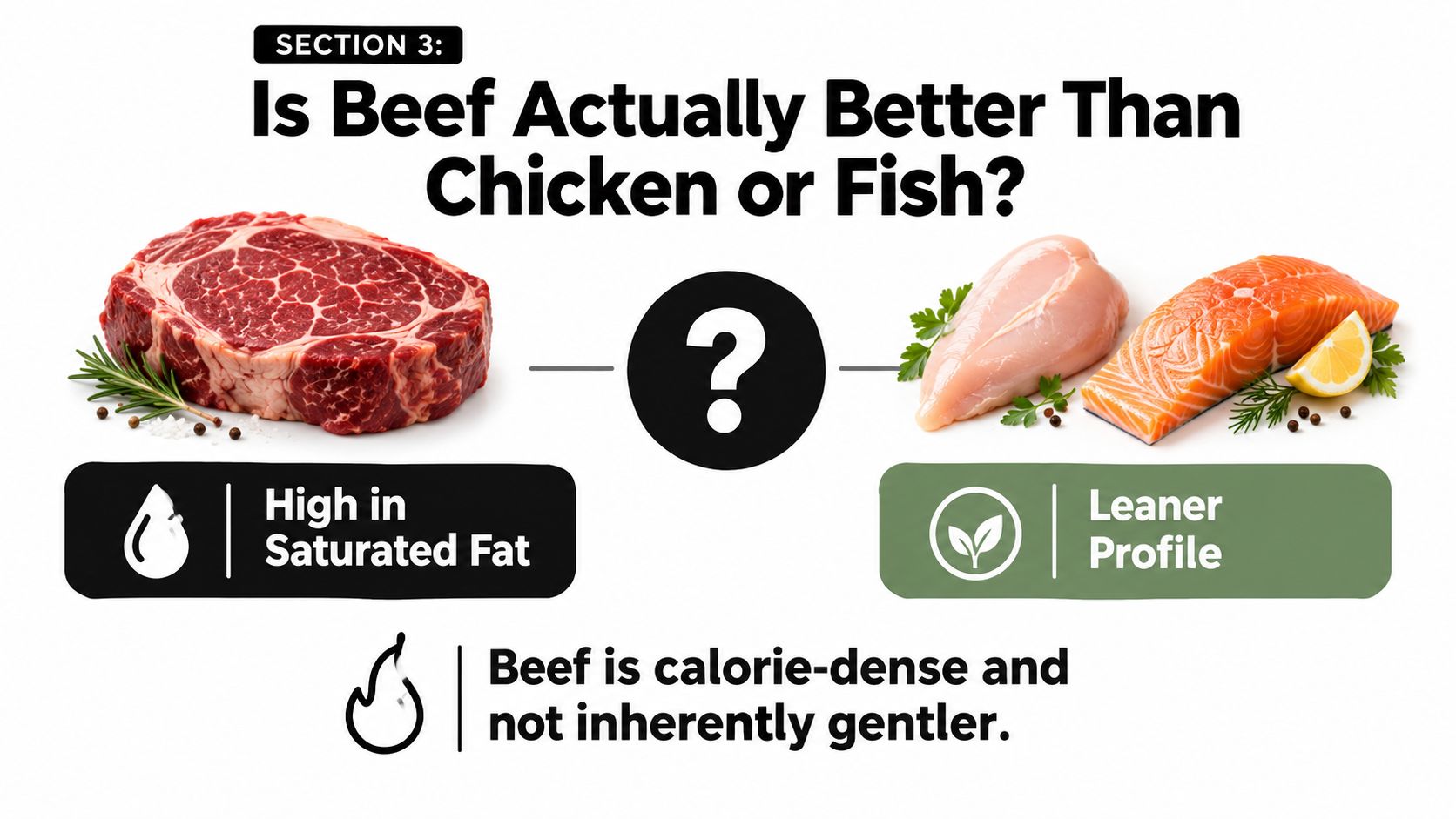
A beef-liver treat and a lean chicken morsel don't create the same feeding situation. Neither does a single-protein beef cube compared with a fish-flavored biscuit containing several animal ingredients. Calling one “better” without reading the rest of the label turns a useful rotation decision into a marketing shortcut.
When beef can be useful
Beef can make sense as a rotation protein when poultry treats dominate your cat's routine. It can also provide an alternative for cats that don't tolerate a familiar protein, but a suspected sensitivity isn't something to diagnose by casually switching between several treats. A veterinarian can help design a controlled elimination or reintroduction plan when food reactions are a concern.
Protein rotation should also remain practical. If your cat eats a complete food containing beef, adding a beef-heavy treat may offer less variety than choosing a different protein. If fish already appears often in the diet, a non-fish reward may help reduce reliance on fish-flavored snacks. The right choice depends on the full pattern, not the treat bag alone.
This guide to feline protein needs can help you think about protein as part of the whole diet rather than as a competition between animal names.
When beef may not fit
A dense beef-and-organ treat may be too rich for a cat that gains weight easily or develops digestive upset from fatty snacks. Cats with kidney disease, confirmed allergies, gastrointestinal conditions, or other medical needs require individualized advice rather than a general protein ranking. Kittens also have different nutritional requirements from adult cats, so an adult treat shouldn't automatically become a routine kitten reward.
If you're considering a supplement or treat for digestive support, Probiotic Supplement for Cats - 30 Single-Serving Packets is a separate beef bone broth-based product, not a beef meat treat. Its snapshot describes veterinarian formulation, clinically studied probiotic strains, third-party testing, and individual packets. Those details don't make it interchangeable with a reward, but they show why owners should distinguish treats, toppers, and supplements.
How to Read a Beef Cat Treat Label
Read the label in an order that prevents the front panel from making the decision for you. Start with the product's intended species and feeding purpose, then move through the ingredient list, guaranteed analysis, calorie information, and storage or handling instructions.
A label-reading sequence
- Confirm the species and purpose. Look for language indicating the product is for cats and intended for intermittent or supplemental feeding. A treat isn't automatically complete and balanced just because it contains animal ingredients.
- Find the first named ingredients. “Beef” near the top gives you more information than “beef flavor” near the end, but the full panel still matters. Note poultry, fish, beef meal, by-products, fats, starches, and flavor compounds.
- Identify the protein pattern. A formula with beef, beef liver, kidney, and heart has a different protein profile from one led by chicken meal and corn. If you need a limited-ingredient or novel-protein option, every additional animal protein deserves attention.
- Check protein, fat, moisture, and calories. Protein and fat percentages need context from moisture. Calories per piece or per gram are especially useful when the pieces are small.
- Scan the additives. Rendered fats, sweeteners, preservatives, colors, and broad flavor terms may not disqualify a product, but they tell you how closely the recipe matches your priorities.
| Label term | What it usually means | Why it matters |
|---|---|---|
| Beef | A beef ingredient is present | The ingredient list shows whether it's the main protein |
| Beef flavor | A flavor profile associated with beef | It doesn't establish substantial beef content |
| Beef meal | Concentrated rendered beef ingredient | It can supply protein, but the tissue mix may be less specific |
| Beef by-product | Beef-derived parts other than the named muscle cut | Organs may be included, and the wording is broad |
| Natural flavor | A flavoring ingredient under a broad label | It doesn't tell you the exact source or amount |
| Beef liver or heart | A named organ ingredient | It gives clearer information about the recipe's composition |
“By-product” isn't a synonym for unsafe or useless. Organs can be valuable animal ingredients, but owners who want a narrow recipe should prefer labels that name the organs rather than hide them behind a general term. Likewise, grain-free doesn't tell you whether a treat is low calorie, single-protein, or suitable for your cat.
A clean-label freeze-dried treat may have one ingredient or a short, transparent list, identifiable animal parts, and calorie guidance that supports measured portions. That clarity is more useful than a front label promising “natural,” “premium,” or “healthy” without explaining what the cat receives.
Feeding Beef Treats Without Unbalancing the Diet
A treat can look tiny and still use a meaningful share of a cat's daily energy. Independent feline-feeding guidance recommends keeping treats under 10% of total daily calories, while also limiting plain, cooked beef to an occasional offering (feline feeding guidance on treats and cooked beef).
That percentage is a ceiling, not a universal serving size. A young, active cat, an indoor cat, and a cat prone to weight gain may have very different calorie needs. Start with your veterinarian's calorie guidance, then reserve part of that daily allowance for treats. Rewards should come from that budget, rather than being added after the regular meals are already planned.
A workable portion system
- Start with the calorie statement. Calories per piece make the arithmetic straightforward. If the package lists calories per kilogram instead, weigh a sample or ask the manufacturer how to convert the figure into a usable portion.
- Set aside the day's treats. Place the planned amount in a small container before training or play. This simple habit prevents repeated handfuls from becoming a second meal.
- Adjust the main food when needed. If treats appear most days, reduce an appropriate amount of the complete food with veterinary or package guidance. The goal is to keep the whole day's intake steady.
- Use smaller rewards. Break jerky into fragments and choose tiny soft pieces for repeated training. For many cats, attention, play, or access to a favorite activity provides much of the reward.
- Watch body condition. Rising weight, less visible waist definition, or lower activity suggests that the cat's total energy intake needs review.
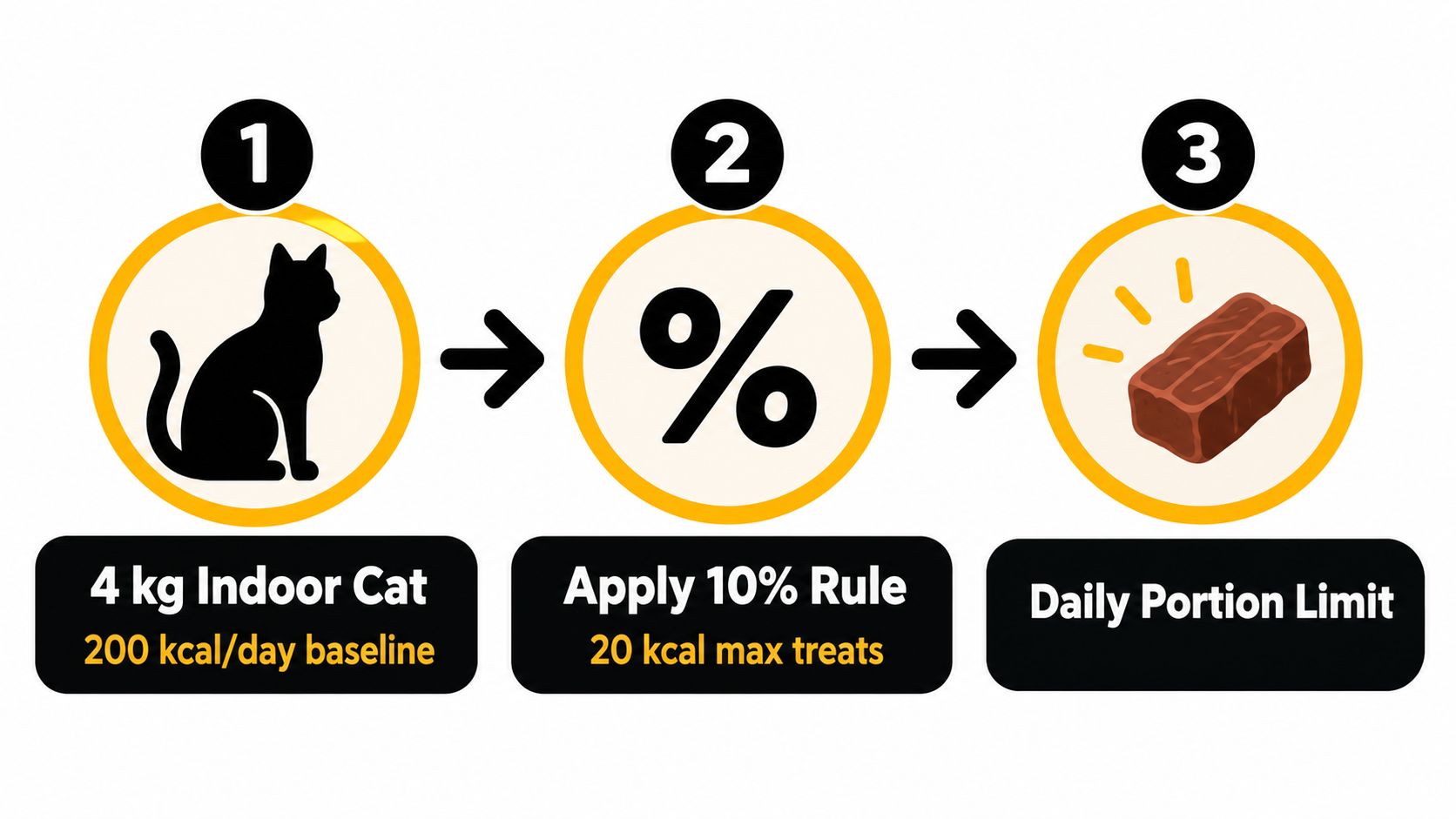
A freeze-dried product listing 3.25 kcal per treat, as noted in the nutrition section, shows why piece-by-piece counting matters. That figure applies to one product, not to beef treats generally. Apply the same method to any package: multiply calories per piece by the number served, then compare the result with the cat's reserved treat allowance.
Protein rotation adds another useful check. Introduce one new treat at a time, especially for a cat with sensitive digestion or a history of food reactions. A single new protein makes changes easier to associate with the right product. If stools change, vomiting occurs, or appetite drops, stop the new treat and contact a veterinarian, particularly when signs persist.
A liquid product such as prebiotic squeeze treats for cat gut health may serve a different purpose from a dry beef reward. It still contributes calories, so include it in the same daily calculation. A functional description does not remove the need to measure portions.
Sourcing and Quality Signals Worth Checking
You don't need private access to a manufacturer's kitchen to make a more informed choice. You need enough information to answer basic questions about origin, ingredients, processing, testing, and traceability.
A short quality filter
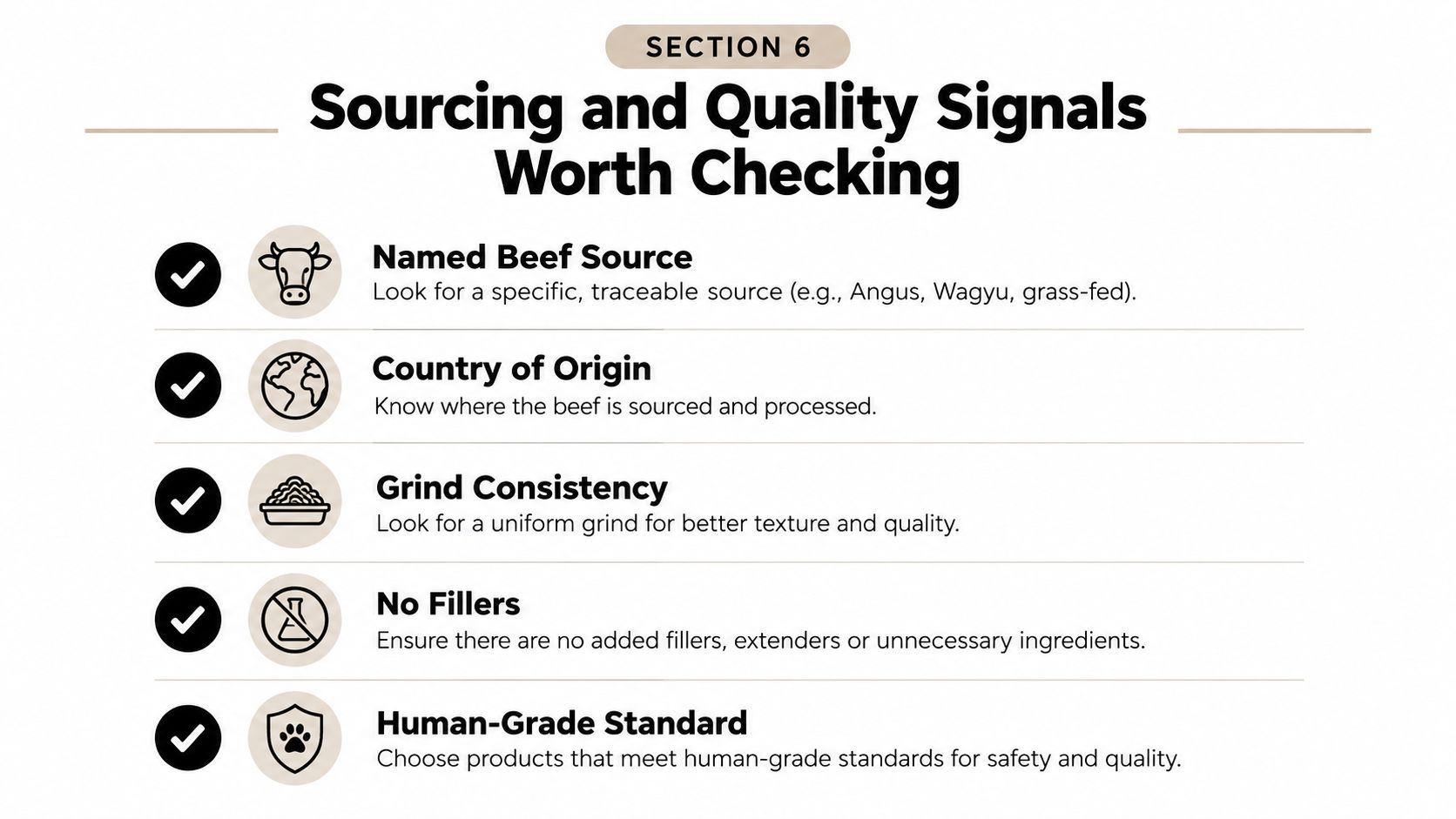
Named source: A label that identifies beef, organs, or a specific ingredient gives you more useful information than a broad meat statement. Country-of-origin details can add context, though they don't replace safe manufacturing.
Processing clarity: Freeze-drying and air-drying remove moisture in different ways from baking or extrusion. The method affects texture, concentration, and handling, but no method alone proves that a product is appropriate for every cat.
Testing and traceability: Look for a manufacturer that can explain its testing practices and provides a batch or lot code. If a concern arises, clear lot information helps connect the product to a specific production run.
Ingredient simplicity: A short list can make protein rotation and sensitivity tracking easier. It doesn't make a treat complete and balanced, and it doesn't eliminate the need to check calories.
Feeding statement: Treats should be clearly identified as supplemental or intermittent products when they aren't formulated as a complete diet. An adequacy statement can establish a baseline for foods designed to provide complete nutrition, but it isn't a gold-standard endorsement of a treat's ingredients.
Packaging details matter more than many owners expect. A sealed pouch, readable expiration information, and a clear lot code won't tell you whether your cat likes the product, but they support safer storage and better accountability. For raw or undercooked products, the CDC's safety position makes processing and handling information especially important, as described earlier.
Joyfull's catalog offers one example of the kind of information some owners look for in gut-focused products. Its cat gut health treats listing describes real beef bone broth, veterinarian formulation, clinically studied probiotic strains, third-party testing, and individual serving packets. Those are checkable product details, not a reason to skip your own label review.
Quick Answers for Concerned Cat Owners
How many beef treats can a typical cat have each day?
There isn't one safe count because treats differ in calories and cats differ in energy needs. Use the package calorie information, keep treats under the recommended share of daily calories, and count small pieces rather than estimating by handful.
Can kittens eat the same beef treats as adult cats?
Not automatically. Kittens need nutrition that supports growth, and treats should never displace their complete kitten diet. Ask your veterinarian whether a particular treat's size, texture, ingredients, and feeding purpose fit your kitten.
What should I do if my cat develops digestive upset?
Stop the new treat and return to the previously tolerated routine while you monitor your cat. Contact a veterinarian if symptoms continue, become severe, or occur with poor appetite, dehydration, lethargy, or other concerning changes.
Are grain-free beef treats better?
Grain-free describes what the treat excludes, not whether it has a useful calorie profile or substantial beef content. A grain-free treat can still be rich, multi-protein, heavily flavored, or easy to overfeed.
Should I avoid beef by-products?
Not necessarily. By-products can include organs, but the term is broad, so it provides less detail than named ingredients such as beef liver or heart. Choose based on your cat's tolerance, your need for a narrow protein list, and the transparency of the label.
What's the difference between beef and beef meal?
Beef meal is a concentrated rendered ingredient, while “beef” is a broader ingredient description that doesn't tell you the moisture level or exact tissue composition by itself. Neither term alone determines quality, so read the complete panel and guaranteed analysis.
When should I skip treats entirely?
Pause treats during a carefully managed diet transition, after a veterinary procedure if your care team advises it, or when your cat has a confirmed allergy to the ingredient. Cats with chronic medical conditions may need a treatment plan that leaves little room for unapproved extras.
The most reliable decision framework is straightforward: identify the protein, understand the processing, check the calories, and match the treat to your cat's individual needs. Beef can be a useful rotation option, but a clear label and controlled portion matter more than the flavor name.
Joyfull offers cat products built around clearly described ingredients, including tuna squeeze treats with prebiotics and a beef bone broth-based probiotic supplement. Visit Joyfull to review the product details and choose a format that fits your cat's treat and gut-support routine.
0 comments