A Vet-Approved Guide to Beans for Dogs
So, you're looking at that can of beans in your pantry and wondering, "Can my dog have some?" It's a great question, and the answer is a definite yes—for some beans. When prepared the right way, many types of beans are not only safe but can be a fantastic, nutritious addition to your dog's diet.
The trick is knowing which beans get the green light and which ones to skip. Some are packed with protein and fiber, while others can be downright dangerous if they aren't cooked properly.
Why Beans Are Popping Up in Dog Bowls Everywhere
If you're like most dog owners, you're always on the lookout for ways to boost your pup's health. Nutrition is ground zero for that. We've all seen the shift in the dog food aisle, right? It's less about mystery meat kibble and more about real, whole foods we recognize. This isn't just some passing trend; it's a fundamental change in how we view our dogs' wellness.
The numbers back this up, too. The global dog food market is on a massive growth spurt, expected to jump from about USD 106.78 billion in 2026 to a whopping USD 153.92 billion by 2031. A huge part of that is the demand for human-grade ingredients. We want the best for our dogs, and that means feeding them high-quality, recognizable foods.
The Good, the Bad, and the Gassy
Think of beans as a powerful new ingredient you can add to your dog’s nutritional routine. Used correctly, they’re amazing. But if you're not careful, they can cause some trouble. This guide is here to give you the confidence you need to get it right.
Here’s a sneak peek at what we'll cover:
- The Safe List: We’ll walk through the best beans for your dog, like green beans, black beans, and chickpeas.
- The Danger Zone: You'll learn which beans are a hard "no," including raw kidney beans and fava beans.
- Preparation is Key: Getting the cooking and serving right is absolutely essential for safety.
- Portion Control: We’ll talk about finding that "just right" amount to prevent an upset stomach.
One thing to keep in mind with fiber-rich foods like beans is the potential for a little extra gas. It's usually nothing to worry about, but it’s good to be prepared! For a deeper dive, you might find our guide on what causes gas in dogs helpful.
By the end of this, you'll know exactly how to make beans a healthy, tail-wag-worthy treat for your best friend.
The Good Bean Guide: 10 Safe Beans for Dogs
Figuring out which beans your dog can eat can feel a little overwhelming. But it doesn't have to be. When cooked properly, a surprising number of common beans aren't just safe—they’re actually a fantastic nutritional bonus.
Think of them as tiny, plant-based power-ups. They can add a healthy dose of fiber, protein, and essential vitamins to your dog's regular meals or serve as a great low-calorie treat. The trick is to stick with the good ones and always serve them plain and cooked.
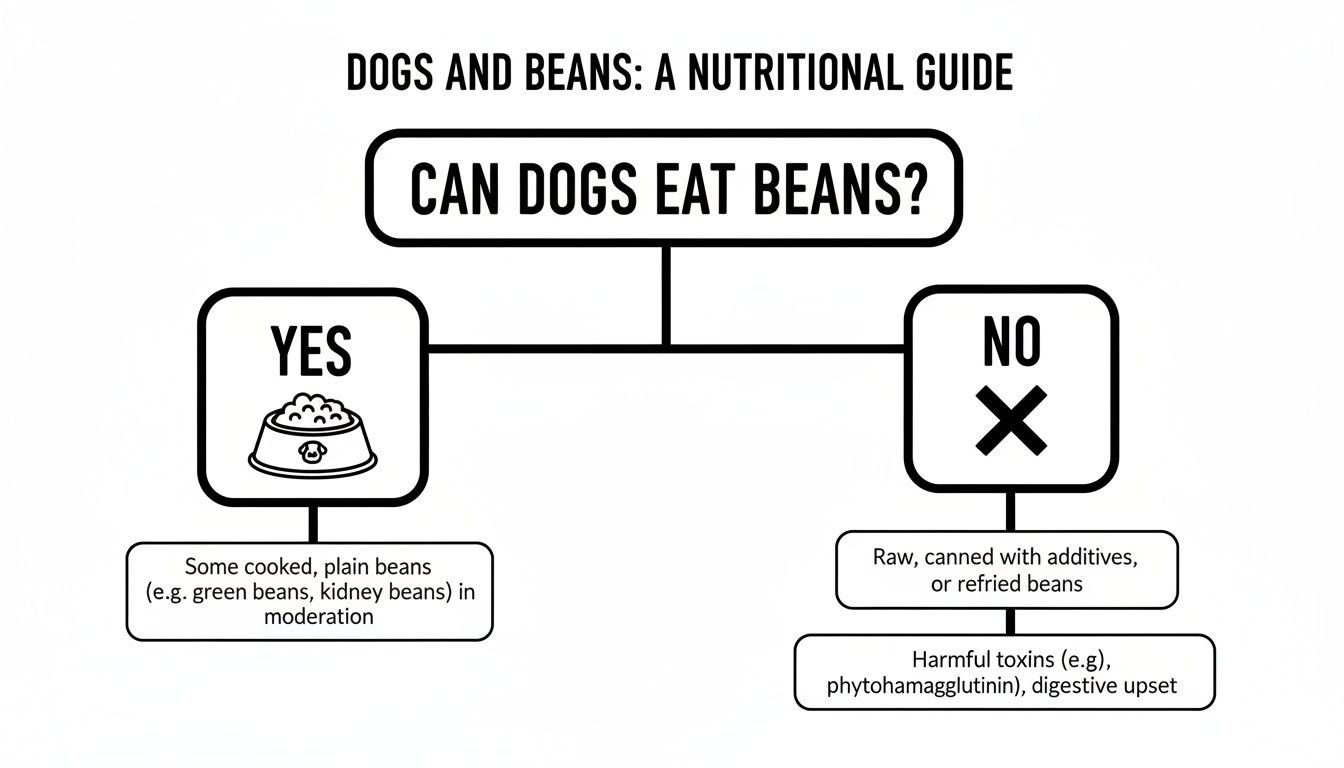
As you can see, preparation is everything. Plain, cooked beans get the green light, but raw, canned, or seasoned beans are a definite no-go.
The Best Beans for Your Dog's Bowl
Here are some of the top vet-approved beans you can share with your pup. Just remember the golden rule for all of them: fully cooked, with absolutely no salt, spices, or oils.
-
Green Beans: A classic for a reason! Green beans are famously low in calories but high in fiber, making them a perfect, crunchy snack for dogs on a diet. The fiber helps them feel full and keeps their digestive system running smoothly.
-
Black Beans: These little guys are antioxidant machines. They're also loaded with fiber and vitamins like K and C, which are great for supporting your dog's immune system and bone health.
-
Pinto Beans: Much like black beans, pintos offer a solid punch of protein and fiber. They're great for providing sustained energy and can help keep blood sugar levels on an even keel.
-
Lima Beans (Butter Beans): Packed with fiber and protein, lima beans are another excellent choice for a healthy, filling snack that supports your dog's overall wellness.
-
Soybeans (Edamame): Edamame is a wonderful source of protein and omega-3 fatty acids, which are fantastic for your dog's skin and coat. Just be sure to serve them out of the pod!
-
Lentils: While technically a legume and not a bean, lentils are often in the same family of foods. They are rich in iron, fiber, and protein, making them a super-healthy addition to a dog's diet.
-
Navy Beans: These small white beans are a great source of minerals like manganese and folate, which play roles in energy production and cell health.
-
Northern Beans: Another mild white bean, these are high in fiber and can be a gentle addition for digestive support when served in moderation.
-
Chickpeas (Garbanzo Beans): A fantastic source of plant-based protein for muscle health, chickpeas also contain potassium and magnesium for heart and nerve function. If you're curious about how to serve them, you can learn more about how dogs can eat chickpeas in our detailed guide.
-
Kidney Beans: These are rich in antioxidants and can be a healthy treat, but they come with a major warning. Kidney beans are toxic when raw or undercooked due to a compound called phytohaemagglutinin. They must be boiled thoroughly to be safe.
Safe Beans for Dogs At a Glance
Here’s a quick-reference chart to help you keep track of the best beans to share with your dog.
| Bean Type | Key Nutritional Benefit | Best Served As |
|---|---|---|
| Green Beans | Low-calorie, high-fiber, supports weight management | Cooked (steamed or boiled), plain |
| Black Beans | Rich in antioxidants, vitamins K & C | Cooked from dry, plain |
| Pinto Beans | Good source of protein and fiber, helps stabilize blood sugar | Cooked from dry, plain |
| Lima Beans | High in protein and dietary fiber | Cooked from dry, plain |
| Lentils | Excellent source of iron, protein, and fiber | Cooked, plain |
| Chickpeas | High in plant-based protein, potassium, and magnesium | Cooked from dry, plain |
| Kidney Beans | Good source of minerals and antioxidants | Thoroughly cooked, plain (never raw) |
This table makes it easy to see the benefits at a glance, but the most important takeaway is consistent across the board: cooked and plain is the only safe way to serve them.
No matter which bean you choose, always start slow. Introduce just a small amount to see how your dog's tummy handles it. This simple step helps you avoid any digestive upset and lets you find out which healthy beans your dog loves most.
The Red Flag List: Beans to Keep Away from Your Dog
While plenty of beans can be a fantastic, healthy snack for your dog, some are definite no-gos. Knowing which beans to leave on the shelf is crucial, as certain types can cause anything from a mild tummy ache to severe toxicity. Being able to spot the dangerous ones is a simple but vital part of keeping your furry friend safe.
Think of it like this: just as some plants in your garden are harmless and others are poisonous, the same logic applies to the bean family. A handful of specific types contain compounds that a dog’s digestive system just wasn't built to handle.
Uncooked and Dangerous Beans
The biggest red flags in the bean world often pop up when they aren't prepared correctly. Some beans contain naturally occurring toxins that are only neutralized through proper, thorough cooking.
-
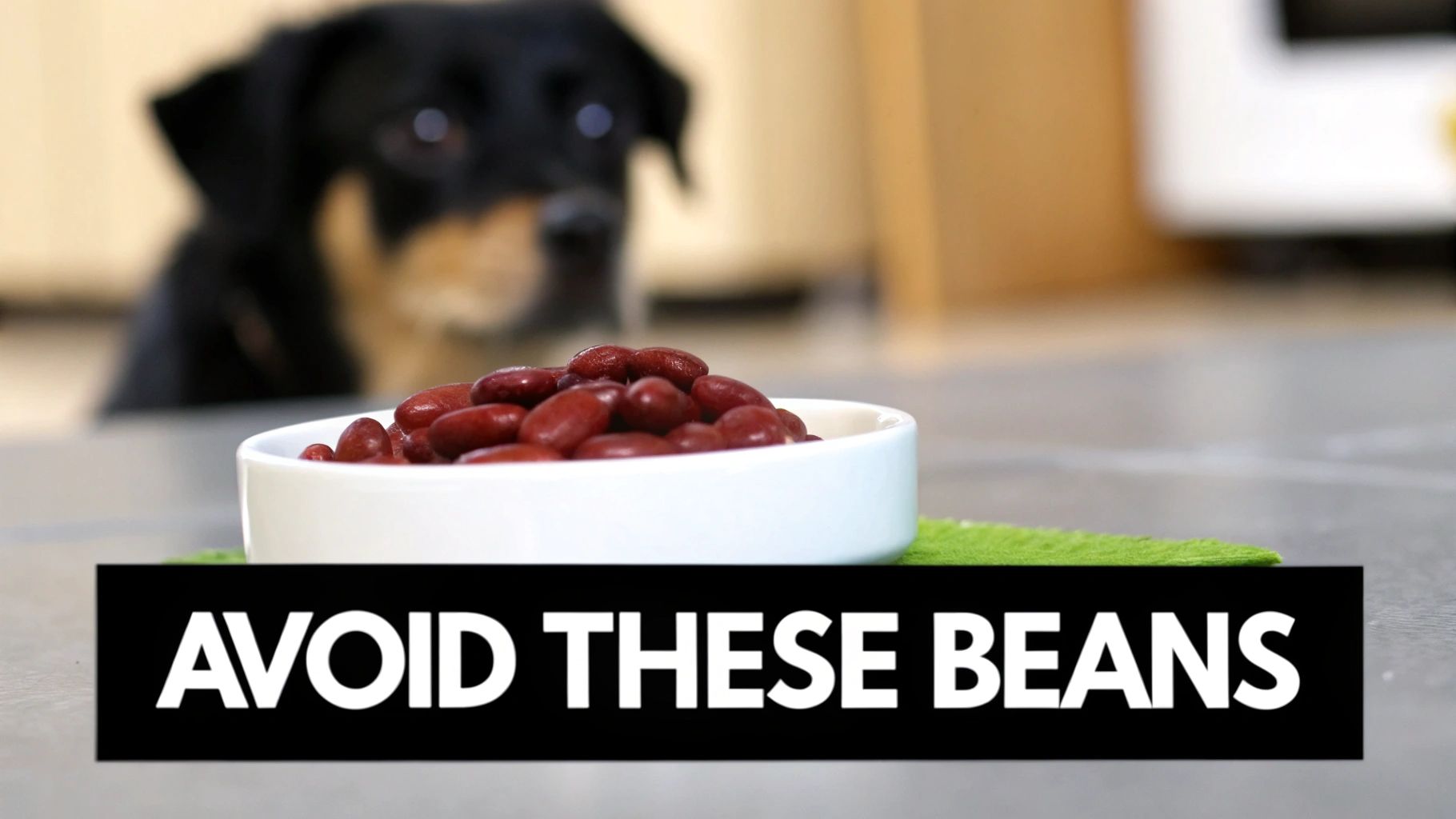
Raw Red Kidney Beans: This is the big one. If you remember nothing else, remember this. Raw or even slightly undercooked kidney beans have a very high concentration of a toxin called phytohaemagglutinin. Even a few raw beans can cause severe poisoning, triggering intense vomiting and diarrhea within hours. To be safe, they absolutely must be boiled for at least 30 minutes.
-
Fava Beans (Broad Beans): These are best kept away from your dog entirely. Fava beans can cause a nasty condition known as favism, which damages red blood cells. On top of that, they can lead to vomiting, diarrhea, and serious abdominal pain.
Beware of Canned and Prepared Beans
How beans are packaged and seasoned for us humans often makes them totally unsuitable for dogs. It's usually the added ingredients that are the real culprits, turning what could be a healthy food into a harmful one.
The convenience of canned beans is tempting, I get it. But most are absolutely loaded with sodium, preservatives, and flavorings that are no good for dogs. Always read the label—if you see anything other than beans and water, it's best to put it back on the shelf.
Many popular canned bean products are a cocktail of ingredients that can cause real trouble.
-
Baked Beans: Never a good idea. They're swimming in a sweet and savory sauce that’s packed with sugar and, worse, often contains onion or garlic powder. Both onion and garlic are toxic to dogs.
-
Chili Beans: For the same reason, chili beans are out. They're loaded with spices like chili powder and cumin, plus the usual suspects—onions and garlic—which can cause serious gastrointestinal distress.
-
Refried Beans: These are typically made with high levels of fat, salt, and all sorts of seasonings. They're just far too rich for a dog's digestive system to handle.
-
Coffee Beans: Okay, they aren't a legume, but it's a critical warning. Coffee beans are extremely dangerous. The caffeine is highly toxic to dogs and can lead to hyperactivity, seizures, and even death.
Your safest bet is always to prepare beans yourself from their plain, dried form. This gives you complete control over what goes into your dog's bowl, ensuring they get all the nutritional perks without any of the hidden dangers. When it comes to feeding your dog beans, simple is always better.
The Nutritional Punch Packed in a Tiny Bean
So, we know which beans are safe for dogs, but let's get into the why. What makes them such a great addition to your pup's diet? It's easy to dismiss them as simple filler, but these little legumes are actually nutritional heavyweights that can seriously support your dog's health.
Think of the fiber in beans as your dog's personal digestive tract janitor. It sweeps everything along, keeping bowel movements regular and preventing constipation. If you have a dog that sometimes struggles with tummy troubles, a little bit of bean fiber can make a world of difference.
A Secret Weapon for Weight Management
The benefits of fiber don't just stop at digestion. It also helps your dog feel full and satisfied for much longer after a meal. This is a huge win for pups who are always sniffing around for their next snack or need to shed a few pounds.
Adding a small spoonful of cooked beans to their bowl can boost the meal's staying power without piling on the calories. Suddenly, that post-dinner begging might just become a thing of the past.
And this isn't just wishful thinking. A study actually looked at this, finding that dog foods with navy and black beans were not only highly digestible but also really effective for helping overweight dogs on a weight-loss plan. You can dig into the full findings on bean digestibility and dog nutrition here.
Plant-Powered Protein and Micronutrients
Your dog's diet should absolutely be centered around high-quality animal protein, but plant-based sources like beans make for a fantastic supporting act. Protein is the building block for everything—strong muscles, tissue repair, you name it. A little bean boost complements their main protein source perfectly.
Beyond the big stuff like protein and fiber, beans are also loaded with essential vitamins and minerals that keep your dog's body running smoothly.
Beans offer a surprising variety of micronutrients. Depending on the type, you'll find everything from potassium for heart health to iron for healthy blood cells and magnesium for nerve function. These elements work together to keep your dog's engine running efficiently.
For instance, many types of beans are a great source of:
- Folate: A key player in cell growth and metabolism.
- Iron: Absolutely crucial for carrying oxygen in the blood.
- Magnesium and Potassium: These two support healthy muscle and nerve function.
This potent mix of nutrients makes beans a really well-rounded addition. They're a lot like other healthy veggies, such as peas, in that they help diversify your dog’s diet beyond their standard kibble. If you want more ideas, check out our guide on whether peas are good for dogs. Adding these healthy extras in moderation is a simple but powerful way to support your dog’s long-term wellness.
Preparing Beans the Right Way for Your Dog
Knowing which beans are safe is only the first step. How you prepare them is what really makes the difference between a healthy treat and a bellyache waiting to happen. If you serve them the wrong way, you could be looking at digestive upset or even toxicity. Thankfully, getting it right is simple.
The golden rule is this: always serve beans cooked and completely plain.
Cooking neutralizes potentially harmful compounds and makes the good stuff—all those nutrients—much easier for your dog's system to absorb. This means no salt, no spices, and definitely no garlic or onions, which are toxic to dogs. When it comes to your dog's food, simplicity is your best friend.
Starting with Dry Beans
If you have the time, starting with dry beans is always the best way to go. It gives you complete control over the entire process, so you know for sure that no sneaky additives are making their way into your dog's bowl.
Here's how to do it, step-by-step:
- Soak Them First: Put your dry beans in a big bowl and cover them with a few inches of water. Let them soak overnight, or for at least 8 hours. Don't skip this! Soaking helps break down the complex sugars that can cause gassiness, making the beans much easier on your dog's tummy.
- Rinse Thoroughly: After they've soaked, drain off the water and give the beans a really good rinse. You'll see they've plumped up quite a bit.
- Cook Until Soft: Toss the rinsed beans in a pot, cover them with fresh water, and bring it all to a boil. Then, lower the heat and let them simmer until they're nice and soft. This can take a while, so plan for at least an hour.
- Cool and Serve Plain: Once they're cooked through, let the beans cool down completely. Remember, no salt or seasonings whatsoever!
Using Canned Beans Safely
Let's be real—we don't always have time to soak beans overnight. Canned beans can work in a pinch, but you have to be a bit of a detective. The key is to read the label like a hawk.
Look for cans that are clearly marked with "no salt added" or "low sodium." Regular canned beans are often swimming in a salty brine that is way too much for a dog to handle.
Even if you grab a low-sodium can, you still need to rinse the beans thoroughly under cool, running water. This washes off any leftover salt and preservatives from the canning liquid.
How Much Is Too Much?
With any treat, portion control is everything. Beans should be a healthy mix-in or a special snack, not a replacement for their regular meals.
A great rule of thumb is the 10% rule: treats should never make up more than 10% of your dog's total daily calories.
When thinking about different ways to serve beans, you can get creative. Roasting, for example, can give them a nice texture. While you might find human recipes for preparing green beans that call for things like garlic, you absolutely must leave those ingredients out for your pup. A spoonful of cooked, plain beans mixed into their kibble is usually the perfect amount for a medium-sized dog.
Simple Homemade Dog Treats with Beans
Alright, let's get to the fun part—actually using what we've learned to make something your dog will love. Whipping up simple, wholesome treats is a fantastic way to introduce more variety and nutrition into their diet. It’s how you turn a humble can of beans into a full-body tail-wagging reward.
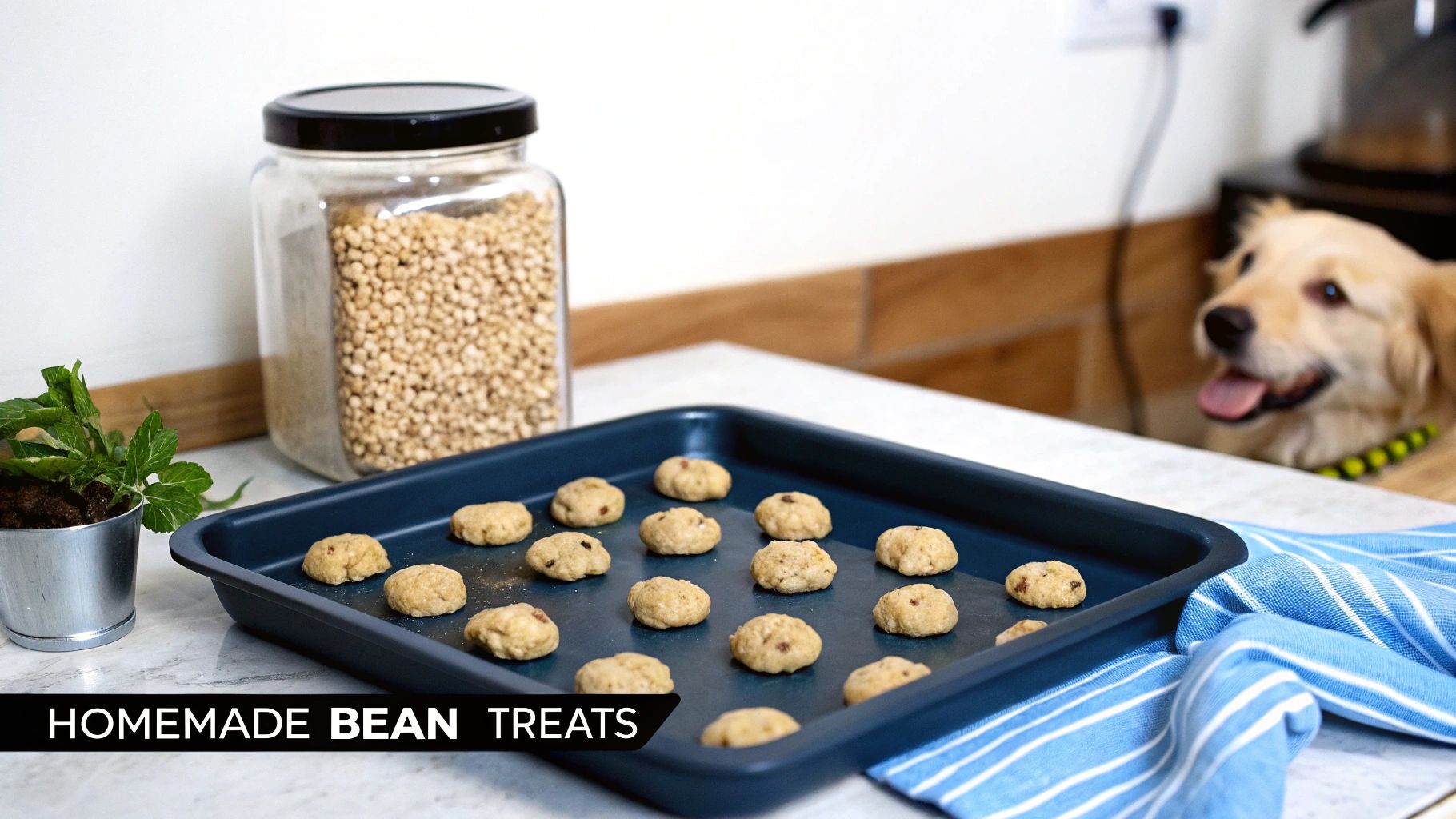
The secret here is to keep it simple. You don't need a long list of fancy ingredients. The best homemade treats often come from just a handful of things you probably already have sitting in your pantry.
And if you find a recipe your pup absolutely adores, you might want to make a bigger batch next time. Knowing how to properly scale a recipe is a game-changer, whether you're making just enough for your little one or prepping for a whole pack of furry friends.
Green Bean Pupsicles
This has to be the easiest treat on the planet. It’s crunchy, hydrating, and perfect for a hot day. With only one ingredient, you can have these ready in no time, making them the ultimate low-calorie go-to.
- Prep: Grab some fresh green beans, give them a good wash, and trim off the ends.
- Blanch: Pop them into boiling water for just 2-3 minutes. You're looking for them to turn a vibrant green while staying crisp.
- Cool & Freeze: Immediately dunk them in an ice bath to lock in that color and crunch. Pat them dry, spread them out on a baking sheet, and freeze until they're solid.
- Serve: Toss your dog one or two for a frosty, satisfying snack they can crunch on.
Pro Tip: Blanching the green beans, rather than serving them raw, can make them a bit easier on your dog's tummy. Best of all, they still keep that delightful crunch that dogs find so irresistible.
Chickpea and Pumpkin Power Bites
These little bites are soft, chewy, and loaded with protein and fiber. They're perfect as high-value training rewards or as a nutritious snack for senior dogs who might find crunchy treats a bit challenging.
Ingredients:
- 1 cup of cooked, unsalted chickpeas (canned is fine, just rinse them thoroughly!)
- 1/2 cup of plain pumpkin puree (100% pumpkin, not the spiced pie filling)
- 1/4 cup of dog-safe peanut butter (check the label for no xylitol)
Instructions:
- Toss all three ingredients into a food processor. Blend everything together until you have a thick, smooth paste.
- Scoop and roll the mixture into small, bite-sized balls. Arrange them on a baking sheet lined with parchment paper.
- Let them chill in the refrigerator for at least an hour to firm up.
- You can store these little power bites in an airtight container in the fridge for up to a week.
Common Questions About Feeding Your Dog Beans
It's only natural to have a few questions before adding a new food to your dog's bowl. Let's clear up some of the most common concerns so you can feel confident about sharing beans with your furry friend.
How Many Beans Can My Dog Have?
Think of beans as a healthy bonus, not a main course. A great rule of thumb to follow is the 10% rule, which simply means that treats—including beans—should never take up more than 10% of your dog’s total daily calories.
For most pups, this looks like a tablespoon or so mixed into their regular food, or just a few whole beans offered as a high-value training reward.
Are Canned Beans Really Safe?
Yes, they can be, but you have to be a bit of a detective. If you're reaching for a can, make sure it's explicitly labeled "no salt added" or "low sodium." Then, give those beans a good rinse under cool, running water to wash off any leftover sodium and preservatives from the canning liquid.
The gold standard is always cooking beans from their dried form yourself. This gives you complete control over what goes into your dog's body. But let's be realistic—for busy pet parents, a well-rinsed, no-salt-added canned bean is a perfectly fine and convenient alternative.
What if My Dog Eats a Raw Bean by Accident?
Don't panic just yet. If a stray green bean drops on the kitchen floor and your dog gobbles it up, it’s highly unlikely to cause any issues.
The real concern is with raw, dried beans, especially kidney beans. If your dog gets into a bag of uncooked kidney beans or eats a significant amount of any raw bean, you should call your veterinarian right away for advice. Raw kidney beans contain a toxin that can be very dangerous, so prompt action is key.
Will Beans Make My Dog Gassy?
It's the age-old question, and the answer is... it depends! The high fiber content in beans is fantastic for promoting regular digestion and can actually support good gut health. For some dogs, though, that same fiber can lead to a bit of extra tooting.
The secret to minimizing gas is all in the prep work. Soaking dried beans overnight and cooking them thoroughly, then introducing them to your dog's diet very slowly, can make all the difference.
Here at Joyfull, our mission is to make pet wellness straightforward and honest. We craft our better-for-you snacks with clean ingredients and top-tier proteins, because we believe a healthy life isn't just for people. Discover our full range of wholesome treats at Joyfullpet.com!