


A well-cared-for bichon Shih Tzu typically lives about 12 to 16 years, and some reach the late teens. That range is the main story, because a Shichon's lifespan depends on size, inherited health risks, and the care choices an owner makes every day.
Table of Contents
- What the Average Lifespan of a Bichon Shih Tzu Really Looks Like
- How the Parent Breeds Shape the Shichon Lifespan
- Why Small Dogs Like the Bichon Shih Tzu Tend to Live Longer
- Common Health Issues That Affect a Shichon's Lifespan
- Everyday Care Habits That Help a Bichon Shih Tzu Live Longer
- The Truth About Hybrid Vigor in Bichon Shih Tzu Mixes
- Putting It All Together for a Longer, Healthier Life
What the Average Lifespan of a Bichon Shih Tzu Really Looks Like
A healthy bichon Shih Tzu usually lives in a 12 to 16 year range, and some breed references place longer-lived dogs into the upper teens (Spirit Dog Training, PetMD). The average lifespan of a bichon Shih Tzu is better read as a range, because body size, inherited traits, and day-to-day care all shape where a dog lands.
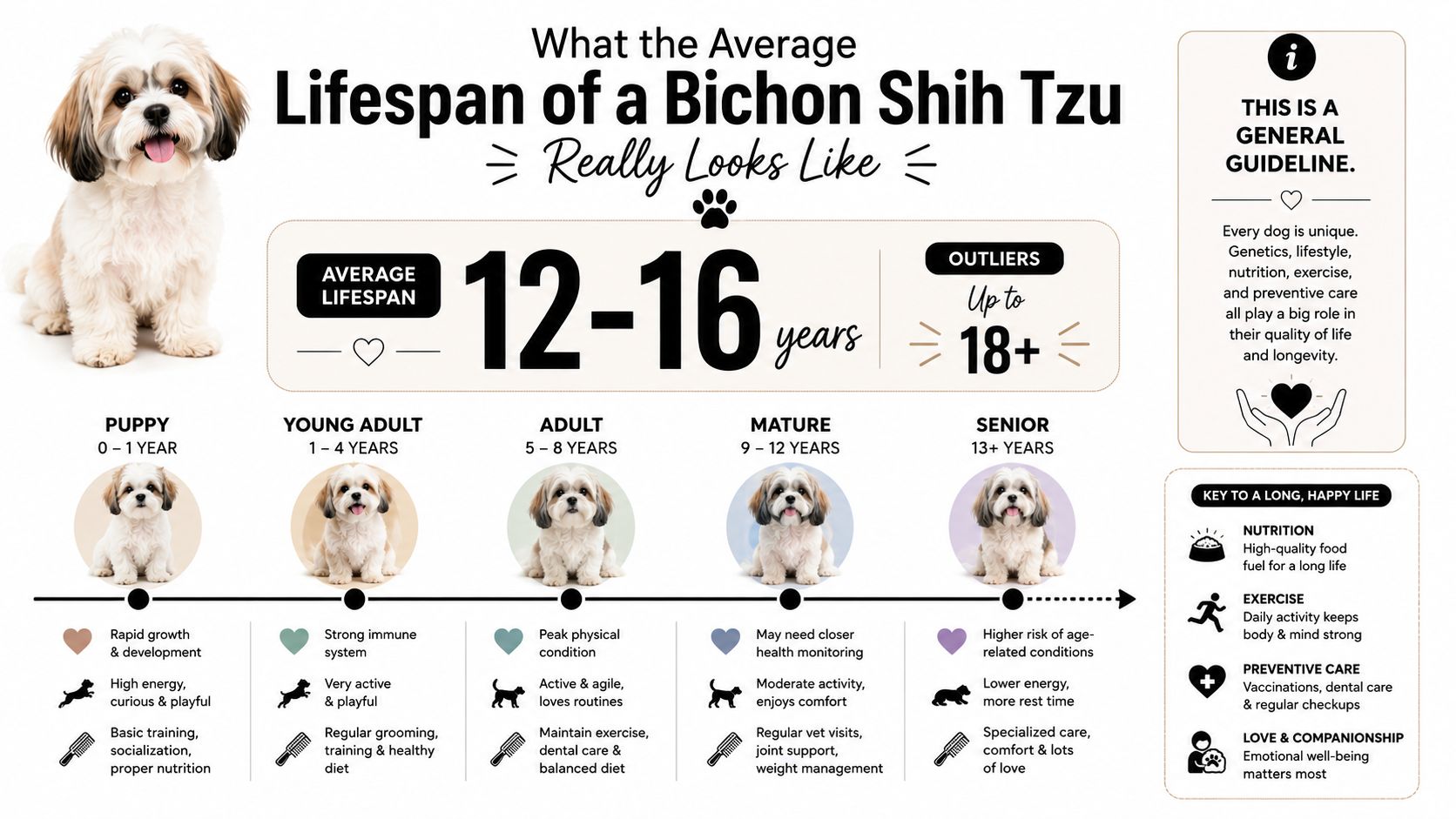
That range is not random. Small mixed breeds often age a little like compact cars, sturdy for their size, but still sensitive to regular maintenance. A Shichon's lifespan reflects the overlap between its parent breeds, and its own health history adds the finer detail.
Daily care matters just as much as genetics. Preventive vet visits, steady weight control, dental care, and prompt attention to eye or breathing changes can all tilt the odds toward the longer end of the range. Poor routine care does the opposite, even in a dog that starts with good genes.
A large UK study of Shih Tzus found a median age at death of 12.7 years, with estimated life expectancy at birth of 11.05 years (Embrace Pet Insurance). That does not set a ceiling for every Shichon. It does show why owners should treat lifespan as a practical planning tool, not a single promise.
A useful way to read the research is this. The breed mix gives you the starting point, and the care choices you make after puppyhood decide whether the dog stays on track. That is the part owners can influence.
How the Parent Breeds Shape the Shichon Lifespan
The parent breeds set the starting range for a Shichon's lifespan, much like the frame of a house shapes what can be built on it. Bichon Frises are often described as living around 12 to 15 years, and Shih Tzus are commonly placed around 10 to 16 years. A Shichon usually falls where those two lines overlap, which is why the mix is often discussed in the low-to-mid teens.
| Breed | Typical Lifespan Range | Median Lifespan |
|---|---|---|
| Bichon Frise | 12 to 15 years | Not provided in verified data |
| Shih Tzu | 10 to 16 years | 12.7 years in one UK study |
| Shichon | 12 to 16 years, sometimes 15 to 18 years | Often described around the low-to-mid teens |
A puppy does not inherit a single neat average. It gets a blend of traits from both parent lines, and that blend can tilt in different directions. One Shichon may inherit more of the Shih Tzu side's breathing or eye concerns, while another may take on more of the Bichon side's allergy tendency. That is why breeder screening matters so much, because parents checked for hereditary problems can give puppies a better starting point even when no test removes every risk.
The same idea shows up in broader breed comparisons. The shih tzu lifespan factors overview is useful because it shows how much breed-specific health patterns can shape longevity over time.
The average lifespan of a bichon Shih Tzu is better understood as a range than a fixed number. Genetics sets the opening chapter, but it does not write the whole story. A Shichon's final outcome can move up or down depending on what the parents pass along and what happens after adoption.
Care choices still matter, even in a dog with a promising genetic starting point. Regular vet visits, steady weight control, dental care, and quick attention to eye or breathing changes all help a small dog stay closer to the healthier end of that range.
Why Small Dogs Like the Bichon Shih Tzu Tend to Live Longer
Small dogs often live longer than large dogs, and the pattern is strong enough to matter when you're estimating a Shichon's lifespan. In large veterinary datasets, small dogs average roughly 13.5 years of life expectancy at birth, with median survival around 16.2 years, while mixed-breed dogs show only a modest average advantage of about 1.2 years over similarly sized purebreds (PMC study).
That doesn't mean size is destiny. It does mean a compact dog body is usually working with a lighter load than a giant breed body, and that affects joints, heart strain, and the pace of age-related wear.
The biology in plain language
Think of aging like mileage on a car. A small car and a big truck can both be well maintained, but the truck's parts generally face more stress because there's more weight moving through the system. Dogs follow a similar pattern, and the Shichon's small frame puts it in the long-lived end of the spectrum before anyone even talks about grooming or diet.
A Shichon is typically a small companion dog, and that size alone gives it a longevity head start. It doesn't guarantee a long life, but it lowers the odds of the shorter timelines seen in giant breeds. That's one reason breed guides keep clustering this mix in the low-to-mid teens.
Simple takeaway: In dogs, smaller usually means longer-lived, but only if the dog stays lean, mobile, and medically monitored.
Mixed-breed status can help a little, but it's not magic. The modest advantage seen in studies suggests that a cross can sometimes reduce the chance of inheriting two copies of the same harmful recessive gene, yet the effect is not large enough to override size or care. For a Shichon, the advantage is the combination of small-body biology and thoughtful ownership.
Common Health Issues That Affect a Shichon's Lifespan
The health issues that matter most are the ones that chip away at comfort first, then longevity. In the Shih Tzu mortality study referenced earlier, common causes of death included enteropathy, heart disease, and poor quality of life, each recorded at 7.9% (Embrace Pet Insurance). That doesn't map one-to-one onto every Shichon, but it does show where attention belongs.
The problems owners should watch closely
Dental disease is one of the most important. Bad breath, tartar buildup, and reluctance to chew can signal trouble, and untreated oral disease can affect eating and overall health. Patellar luxation can show up as skipping steps or a sudden little hop while walking, while brachycephalic airway issues can look like noisy breathing, heat intolerance, or trouble settling after activity.
Eye problems deserve attention too. Dry eye, cataracts, and irritation can cause squinting, redness, pawing at the face, or cloudy-looking eyes. Allergies often show up as licking paws, scratching, recurrent ear issues, or chronic skin redness. Heart concerns, including mitral valve disease, may show up as exercise intolerance, coughing, or tiring more quickly on walks.
| Health Issue | Typical Impact on Lifespan | Early Signs to Watch For |
|---|---|---|
| Dental disease | Can shorten healthy years if infection spreads | Bad breath, tartar, trouble chewing |
| Patellar luxation | Usually affects comfort first, mobility later | Skipping, hopping, limping |
| Brachycephalic airway issues | Can limit exercise tolerance and heat safety | Loud breathing, panting, snoring |
| Eye problems | Can reduce quality of life and comfort | Squinting, redness, cloudiness |
| Allergies | Often chronic, can worsen skin and ear health | Itching, paw licking, ear discharge |
| Heart disease | Can become serious if missed early | Coughing, fatigue, low stamina |
One of the best habits is watching for patterns, not just single bad days. If your dog seems off more than usual, tools like tracking good vs difficult days for your can help you and your vet spot gradual decline instead of guessing.
A calm, steady approach works better than panic. Most of these issues are easier to manage when owners notice them early, and several of them are tightly tied to routine care rather than fate alone.
Everyday Care Habits That Help a Bichon Shih Tzu Live Longer
A Shichon's lifespan improves when routine care is boring, consistent, and specific. The goal isn't perfection. It's stacking small habits that reduce the chance of dental disease, obesity, skin flare-ups, and preventable vet emergencies.
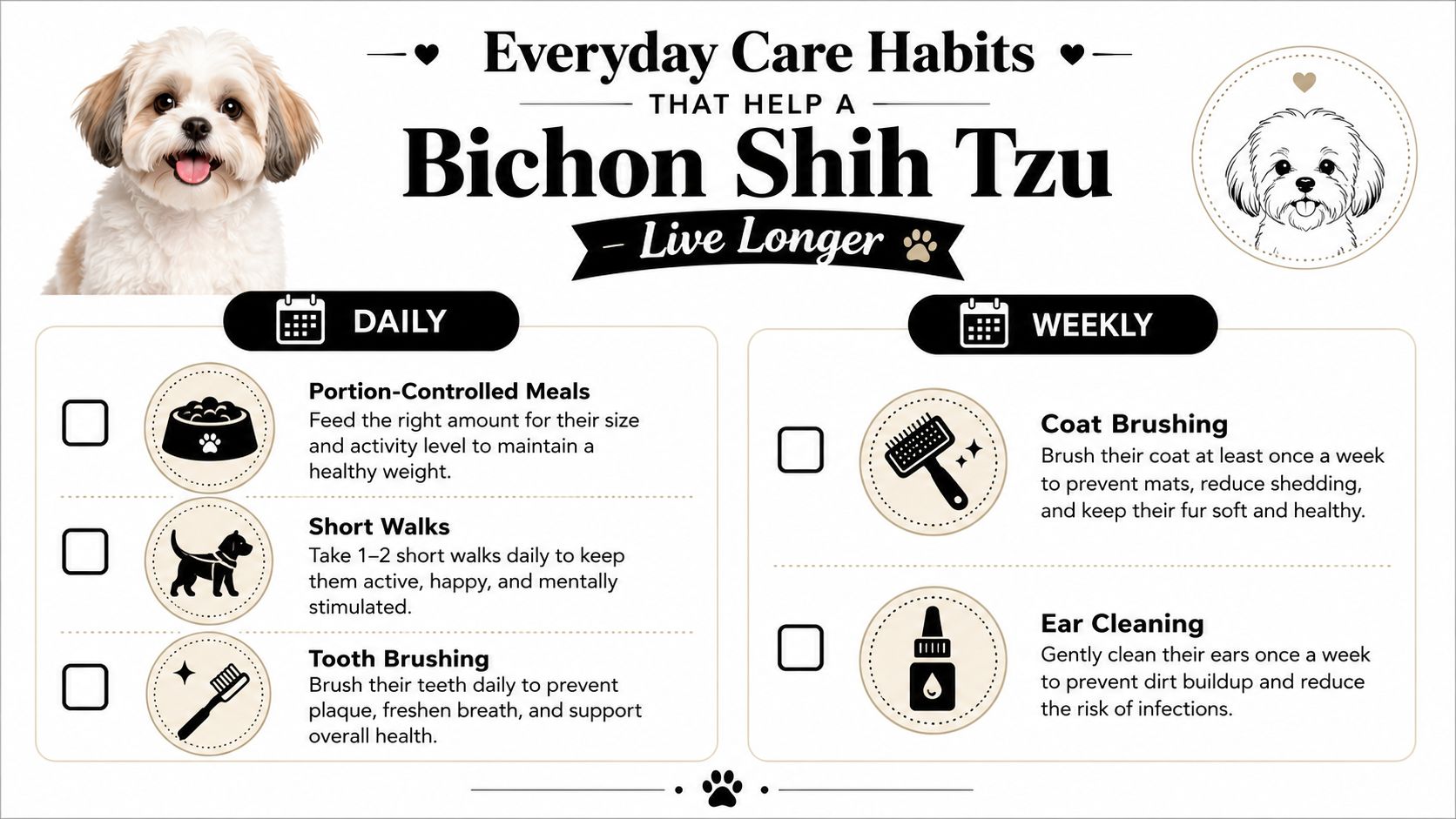
Daily habits that matter most
Portion control comes first. Small dogs gain weight easily, and extra pounds add stress to joints, breathing, and the heart. A 15-minute walk twice a day is a realistic baseline for many healthy adult Shichons, and short bursts of play count too when the weather is bad.
Tooth brushing matters just as much. Daily brushing, or as close to daily as you can manage, helps slow dental buildup. If your vet approves them, VOHC-listed dental chews can support the routine, but they work best as an add-on, not a replacement.
Weekly and yearly habits that pay off
Brush the coat weekly so mats don't trap moisture against the skin. Check ears at the same time, since small floppy ears can hide irritation until it's already uncomfortable. A simple home weight check once a week also helps you catch gradual gain before it turns into a bigger problem.
Practical rule: If you can't remember the last time you checked the ears, teeth, and weight, it's time to put all three on the same weekly reminder.
Yearly care should include a wellness exam, and many dogs also benefit from bloodwork and dental cleanings as recommended by the vet. If you want to read more about keeping a small dog's digestion steady, the dog gut health resource is a useful starting point for thinking about routine wellness support in dogs generally. For mosquito prevention, The Green Advantage heartworm prevention tips can also help owners think about exposure risks in a practical way.
Mental enrichment matters too. Food puzzles, short training sessions, and sniff walks keep a small dog engaged, and an engaged dog usually stays more active as it ages. That extra activity supports weight control and mobility, which feed back into longevity.
The Truth About Hybrid Vigor in Bichon Shih Tzu Mixes
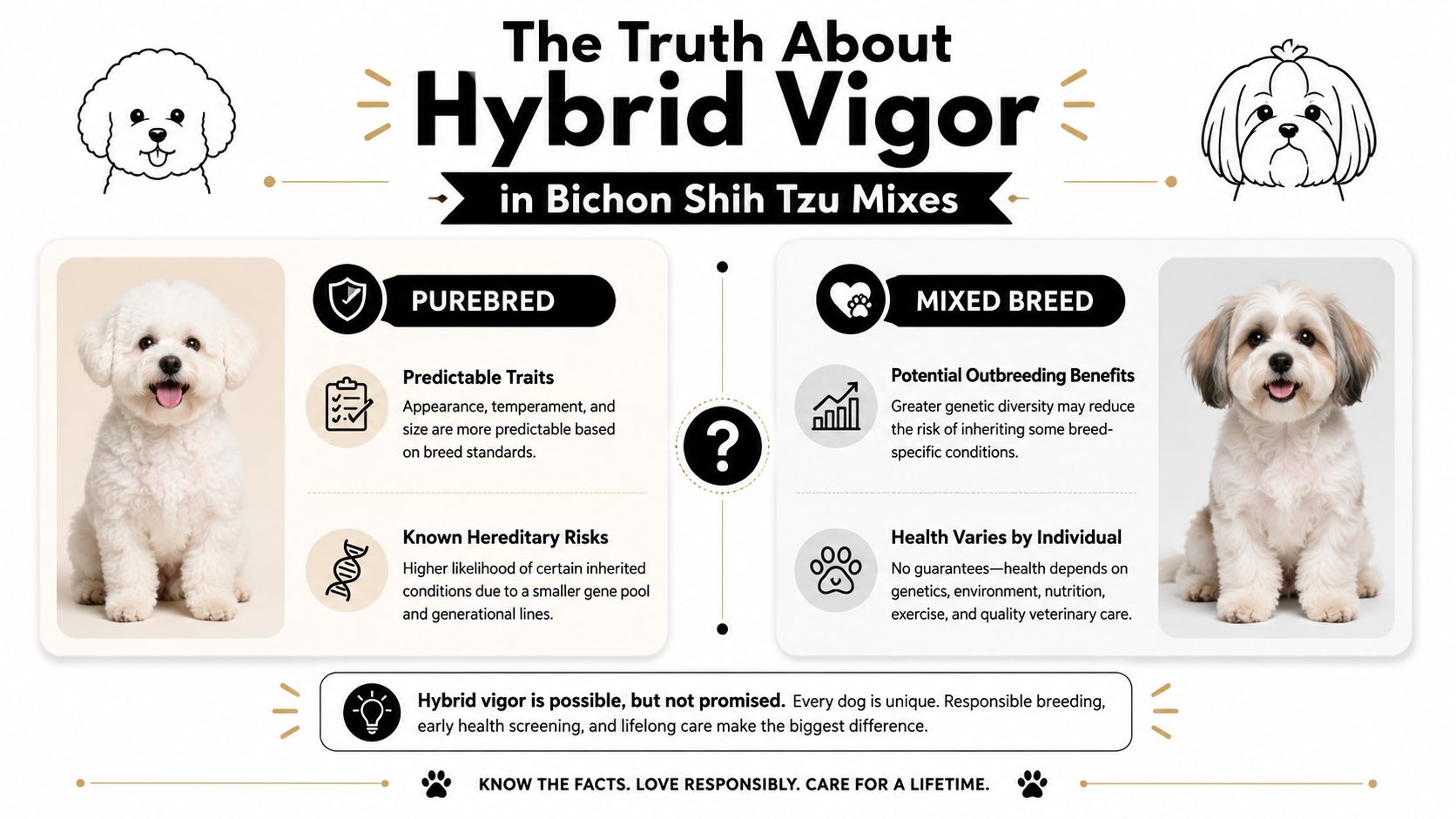
Hybrid vigor can help at the margins, but it is not a promise of better health. In mixed-breed dogs, it can lower the chance of inheriting two copies of the same recessive disease gene, especially if the parents are not closely related. The result is a wider genetic starting point, not a guarantee that inherited problems disappear.
What hybrid vigor can and can't do
A Shichon may inherit some of that genetic diversity, and mixed-breed dogs can show a small longevity advantage over similar purebreds. The broader point is simple, health is shaped by more than breed labels. Structure still matters, and the body plan from either parent can bring its own risks. A Shih Tzu face can still be linked to breathing difficulty, while Bichon ancestry can still come with skin or allergy sensitivity.
That is why screening matters. Good breeding is not just mixing two dogs and hoping for the best. It means checking both parent lines for inherited issues and being honest about what their puppies are likely to carry.
The Malshi lifespan guide shows the same pattern in another small companion mix, long life is possible, but the details still depend on body shape, genetics, and daily care.
The guide to dog couches at The Sofa may seem unrelated, yet it points to the same home-life idea. A dog that rests comfortably, moves easily, and lives in a well-set-up home usually has fewer small stresses piling up over time.
The practical takeaway is straightforward. Hybrid vigor may improve the odds in some dogs, but it does not replace screening, thoughtful breeding, or consistent care.
Putting It All Together for a Longer, Healthier Life
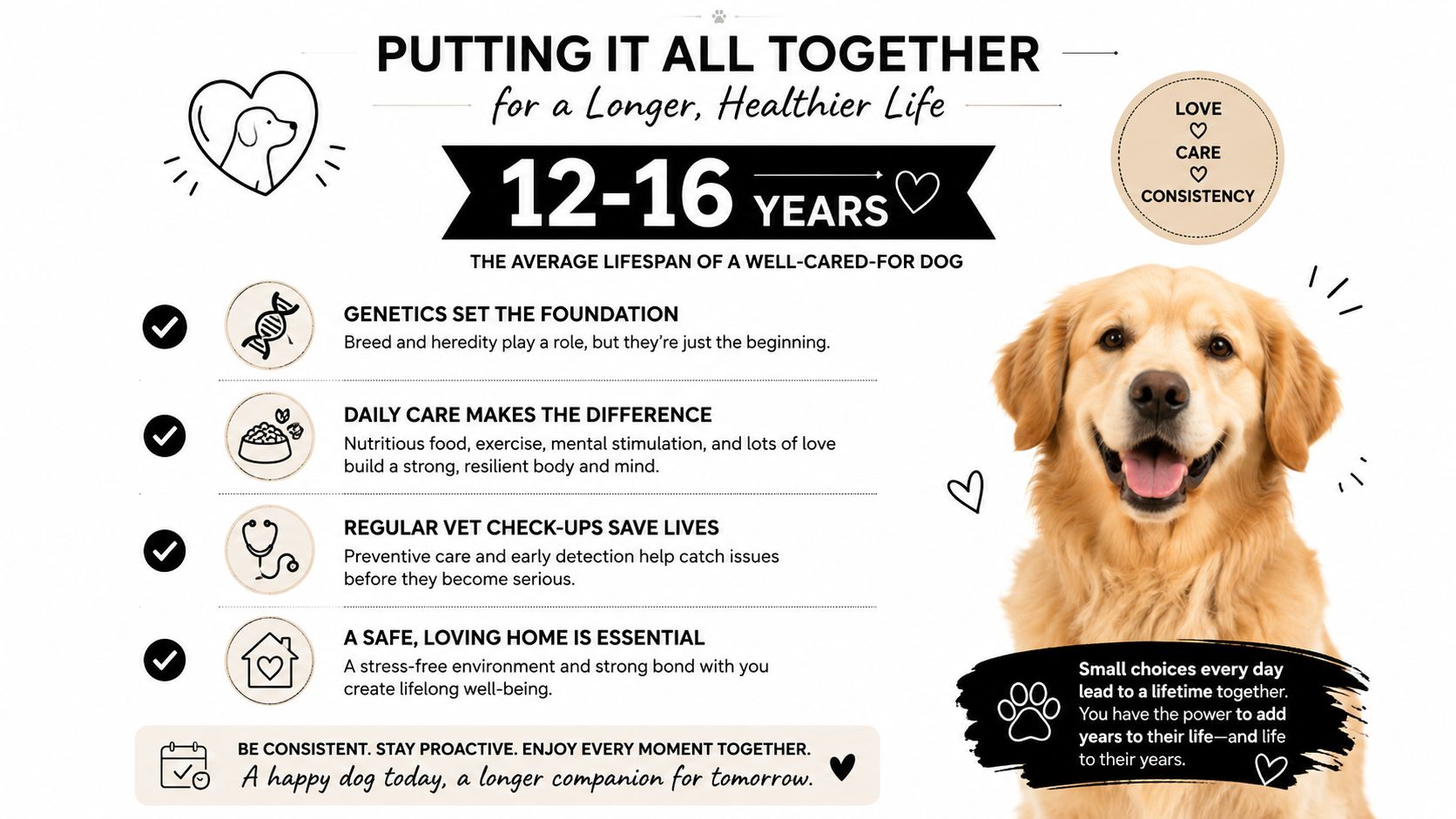
A bichon Shih Tzu usually lives about 12 to 16 years, and some dogs reach the late teens when genetics and care line up well. That range is shaped by small-dog biology, the health tendencies inherited from both parent breeds, and the daily choices that affect weight, teeth, and preventive care.
The shortest useful checklist
- Keep the body lean: extra weight puts more strain on joints, breathing, and the heart.
- Protect the mouth: brushing and dental care help reduce hidden problems that can wear a dog down over time.
- Notice small changes early: a new cough, limping, appetite change, or shorter walks can be an early warning sign.
- Stay consistent with prevention: regular vet exams, bloodwork, and parasite prevention help catch problems sooner.
Longevity in a small companion dog usually comes from ordinary routines, not dramatic fixes. Regular walks, measured meals, clean teeth, and timely vet visits all work together, much like pieces of a safety net. If one strand is missing, the whole net is weaker.
A practical plan can start small. Choose one habit this week, then add another next month. Steady care matters because small dogs often respond well to consistency, and a Shichon benefits from that kind of predictable attention. That is the key takeaway behind the lifespan range.
0 comments