


Every cat owner knows that sound. That unmistakable, gut-wrenching heave from the other room that makes your heart sink. You're immediately running to find the mess, but the real question on your mind is, "Why is my cat throwing up?"
Sometimes, the answer is simple—a stubborn hairball, maybe. But when it starts happening over and over, that's your cat's way of telling you something more serious might be going on. Getting to the bottom of it is the first real step toward helping them feel better for good.
Decoding Your Cat's Vomit: What It Really Means

Vomiting is one of the top reasons cats end up at the vet, but it's a symptom that's widely misunderstood. I like to think of a cat's digestive system like a high-performance engine. A rare hairball, say once a month, is like a brief sputter—not ideal, but usually not a sign of catastrophic failure.
On the other hand, if your cat is throwing up frequently, that's a whole different ballgame. It’s like a persistent rattle under the hood that you just can't ignore. This is a clear signal that the digestive system, or even another part of the body, is in distress. It’s absolutely critical not to brush off recurring episodes as "just a cat thing."
Vomiting Versus Regurgitation
Before you can figure out why your cat is sick, you have to be sure it's actually vomiting. It's incredibly common for pet parents to confuse vomiting with regurgitation, but they point to completely different problems.
Think of it this way:
- Vomiting is an active, forceful event. You'll see their belly contract and hear them retching as their body works hard to expel the contents of their stomach.
- Regurgitation is passive. It’s more like a "blep," where undigested food just seems to spill out effortlessly, often right after they eat. There's no warning and no drama.
Learning to spot the difference is your first—and most important—clue. Regurgitation usually points to an issue with the esophagus (the tube leading to the stomach). True vomiting, however, signals a problem deeper in the digestive tract or even a systemic illness affecting the whole body.
This simple table below is a great tool to help you quickly identify what's happening. This isn't just trivia; giving your vet an accurate description of the event can shave off valuable diagnostic time and get your cat on the path to recovery much faster.
Vomiting vs Regurgitation at a Glance
| Characteristic | Vomiting | Regurgitation |
|---|---|---|
| Process | Active, forceful heaving | Passive, effortless spitting up |
| Timing | Can occur anytime, often long after eating | Usually happens right after eating or drinking |
| Material | Partially digested food, bile, or liquid | Undigested food, often in a tube-like shape |
| Warning Signs | Drooling, pacing, or meowing before the event | Typically happens without any warning |
Knowing what you’re seeing—the effort, the timing, and what comes up—is the first piece of the puzzle. Once you can confidently say "it's vomiting," you can start exploring the potential causes.
The Most Common Reasons Your Cat Is Vomiting
When you find yourself cleaning up yet another mess, it's easy to jump to the worst-case scenario. But before you panic, let's put on a detective hat and look at the usual suspects. Most of the time, the reason your cat is throwing up is surprisingly simple and often tied to what they eat, how they eat, or something they got into.
One of the most classic—and frequent—reasons for a cat throwing up is simply eating too fast. We call it the "scarf and barf." Your cat wolfs down their meal so quickly that their stomach gets overwhelmed and hits the emergency eject button. The result? A pile of barely-digested food on your floor.
Dietary Triggers and Sensitivities
Just like us, cats can have sensitive stomachs. A sudden switch in their food, even if it's a step up in quality, can throw their digestive system for a loop if it’s not done gradually. Their gut just needs a little time to get used to new ingredients.
Beyond that, true food allergies or intolerances are a big reason behind chronic vomiting. Think of it like a person who can't handle dairy or gluten. An allergy is an immune system flare-up, while an intolerance is purely a digestive problem, but both can lead to an upset stomach.
Common culprits often include:
- Specific Proteins: Believe it or not, proteins like beef, fish, and dairy are frequent offenders.
- Fillers: Things like corn, wheat, and soy can be tough for a cat’s system to process.
- Artificial Additives: Unnecessary colors, flavors, and preservatives can easily irritate a sensitive gut.
Vomiting is one of the top health complaints from cat owners, but it's not always a sign of a major illness. In fact, even perfectly healthy cats can start vomiting when their routine gets disrupted. A study from Ohio State University found that changes in daily life increased the risk of sickness behaviors by 3.2 times—for both healthy cats and those with chronic illnesses.
Hairballs: A Hairy Situation
Of course, we can't forget about hairballs. They're an infamous cause of cat vomit, especially for long-haired breeds or cats who are obsessive groomers. As a cat licks its fur, the tiny barbs on its tongue catch all the loose hair, which then gets swallowed.
Most of this hair passes right through, but sometimes it clumps together in the stomach, forming a mass too big to move on to the intestines. The only way out is back up. While a hairball every now and then is normal, if it's happening all the time, it could signal an issue with how well your cat's digestive tract is moving things along. Learn more about what causes hairballs in cats and how to manage them at https://joyfullpet.com/blogs/news/what-causes-hairballs-in-cats.
Environmental Factors and Indiscretions
Sometimes the answer is simple: your cat ate something it shouldn't have. Vets call this dietary indiscretion, and it’s incredibly common. Cats are naturally curious creatures. They might chew on a houseplant (many are toxic!), steal a bit of human food from the counter, or swallow something they found on the floor, like a rubber band, string, or piece of a toy.
Infections can also be the problem. Your cat could catch a stomach bug from another animal or from contaminated food or water. These bugs, like some forms of viral gastroenteritis, typically cause a sudden bout of vomiting and might come with other symptoms like diarrhea or lethargy.
By watching your cat’s habits and paying attention to their environment, you can often figure out what's causing the trouble. A little detective work goes a long way in helping your cat feel better and keeping their digestive system happy.
When Vomiting Signals a Deeper Health Problem
It’s one thing if your cat occasionally throws up after gulping down their dinner too fast. But when vomiting becomes a regular, chronic event, it’s often your cat’s way of sending out an S.O.S. A cat’s digestive system is a surprisingly accurate barometer of their overall health, and persistent vomiting can be a major red flag for an underlying issue that needs a vet’s attention.
The key is to look at the whole picture. Is the vomiting happening alongside other changes, like lethargy, a sudden loss of appetite, or weight loss? When you see these signs together, it’s a strong signal that you’re dealing with more than just a simple case of an upset tummy.
Looking Beyond the Obvious Causes
While our first instinct is to blame the food, vomiting can actually be a symptom of a systemic disease that has very little to do with the stomach itself. Many serious health conditions cause GI distress because they throw the body’s entire system out of whack, leading to widespread inflammation or a buildup of toxins.
Some of the most common underlying diseases include:
- Kidney Disease: When a cat's kidneys aren't working properly, they can't filter toxins out of the blood. This buildup makes them feel constantly nauseous, which leads to vomiting.
- Hyperthyroidism: An overactive thyroid gland cranks up your cat’s metabolism to an unsustainable level. This can completely overwhelm their digestive system, causing both vomiting and diarrhea.
- Pancreatitis: This is a painful inflammation of the pancreas that messes with the production of crucial digestive enzymes. It almost always results in severe vomiting and a complete loss of appetite.
- Inflammatory Bowel Disease (IBD): IBD is a condition marked by chronic inflammation of the GI tract, causing a frustrating cycle of vomiting, diarrhea, and weight loss.
Think of it like the "check engine" light in your car. The light itself doesn't tell you exactly what's wrong, but it's an undeniable signal that something under the hood needs a professional diagnosis. Chronic vomiting is your cat’s check engine light—it's time to call the vet.
This chart can help you start connecting the dots between why your cat might be throwing up and whether it's a minor issue or something more concerning.
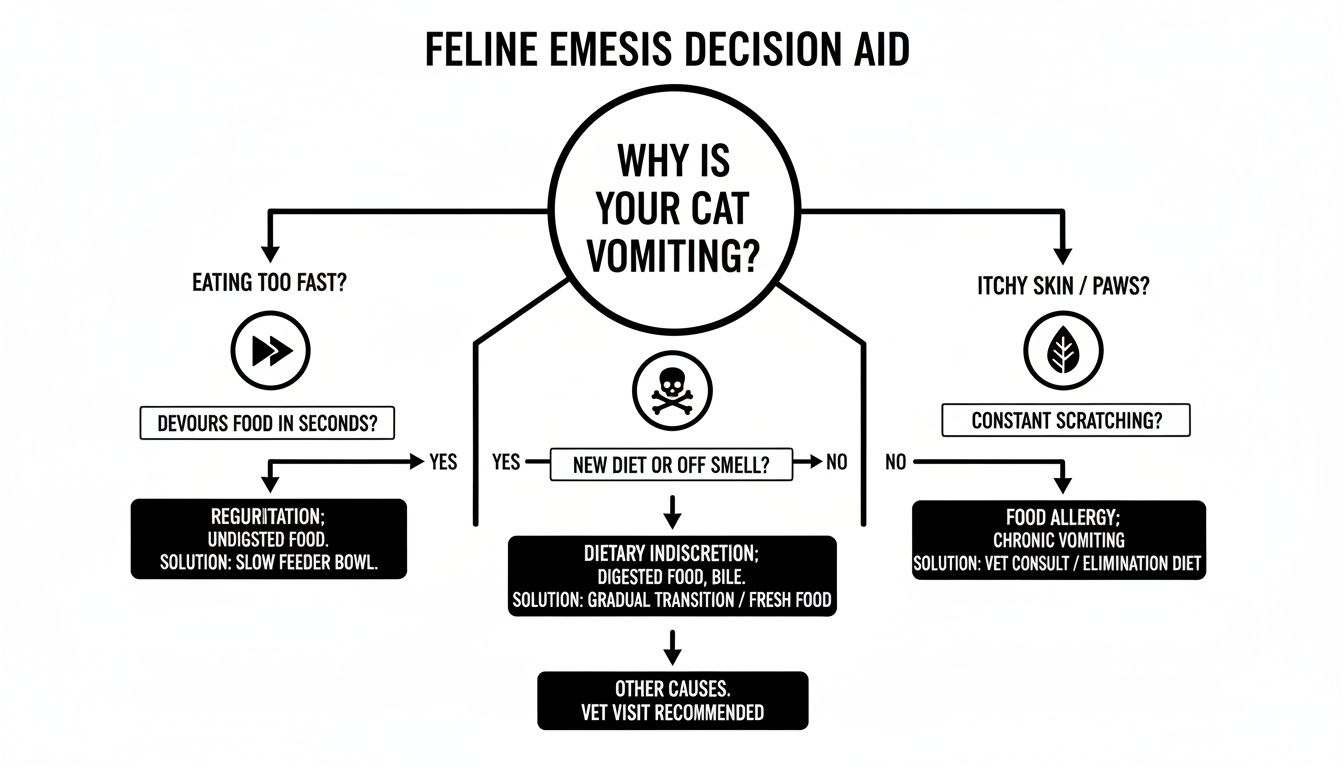
As you can see, the context around the vomiting—like how fast they eat or what they've been exposed to—gives you critical clues to what might really be going on.
When you're faced with a sick cat, it can be tough to know what's a "wait and see" situation and what's a true emergency. We've put together this quick-reference table to help you identify the red flag symptoms that demand an immediate trip to the vet.
Red Flag Symptoms That Require a Vet Visit
| Symptom to Watch For | What It Could Mean | Immediate Action |
|---|---|---|
| Multiple vomiting episodes in a row or for more than 24 hours | Dehydration, obstruction, pancreatitis, toxin ingestion | Call your vet or an emergency clinic immediately. |
| Vomiting blood (bright red or dark, like coffee grounds) | Internal bleeding, ulcers, severe GI tract irritation | This is a medical emergency. Go to a vet right away. |
| Lethargy, weakness, or collapse | Systemic illness, severe dehydration, shock, pain | Seek immediate veterinary care. |
| Trying to vomit but producing nothing (unproductive retching) | Foreign body obstruction, serious gastric issues (like bloat) | This is an emergency. Your cat needs to be seen by a vet. |
| Vomiting accompanied by a swollen or painful abdomen | Pancreatitis, peritonitis, intestinal blockage | Go to an emergency vet clinic without delay. |
| Loss of appetite or refusal to drink water for over 24 hours | Signifies a serious underlying problem and risk of dehydration | Contact your veterinarian for guidance. |
This isn't a complete list, but it covers the most critical signs that your cat needs professional help fast. Trust your gut—if your cat seems very unwell, it's always better to be safe and get them checked out.
The Danger of Foreign Body Obstruction
Another urgent cause of vomiting is a foreign body obstruction. Cats, and especially curious kittens, are infamous for swallowing things they shouldn't—think string, hair ties, rubber bands, or little pieces of plastic toys.
Imagine your cat’s intestine is a garden hose. Normally, water (and digested food) flows right through. But if a rock gets stuck inside, it creates a total blockage. The pressure builds up behind it, and the only way for anything to come out is back the way it came. That’s exactly what happens with an obstruction, leading to forceful, repeated vomiting.
An obstruction is a true medical emergency. If you even suspect your cat has swallowed something they shouldn’t have, don’t wait. Get to a vet immediately. Surgery is often the only way to remove the object and prevent life-threatening damage.
Infectious Diseases as a Cause
Finally, serious viral infections can be the hidden culprit behind vomiting. These are a major concern in multi-cat homes or shelters where germs can spread like wildfire. One documented outbreak saw astrovirus run through a shelter, causing over a third of the cats to vomit. Another huge threat is Feline Panleukopenia (FPL), a devastating virus that attacks the GI system and causes severe vomiting. The case fatality rate for FPL has been observed to be as high as 45.9%, with young kittens being the most vulnerable. You can learn more about these viral threats from the research on the causes of vomiting in cats.
Knowing these red flags isn't about creating panic; it's about empowering you to be your cat's best advocate. Acting quickly when you spot a serious problem can make all the difference in getting your cat the care they need to get to the root of the problem and back on their paws.
When Vomiting Signals a Serious Viral Infection
While we often jump to conclusions about hairballs or dietary indiscretions, sometimes the reason your cat is vomiting is an invisible invader. A serious viral infection can wreak havoc on their system, and persistent vomiting is often one of the first and most obvious signs that something is wrong.
Think of your cat's immune system as a fortress. Day in and day out, it fends off countless minor threats without a fuss. But when a particularly nasty virus lays siege, the body's defenses can be overwhelmed, and the internal battle often results in severe symptoms like vomiting.
Feline Infectious Peritonitis: A Wolf in Sheep's Clothing
One of the most devastating viral culprits is Feline Infectious Peritonitis (FIP). It's a tricky disease because it starts with a very common and usually benign virus, the Feline Coronavirus (FCoV). Most cats who encounter FCoV handle it just fine, but in a small, unlucky percentage, the virus mutates into a highly aggressive form that triggers FIP.
Once it mutates, this virus causes a massive inflammatory reaction throughout the body. The abdomen is often a primary target, leading to relentless vomiting, a noticeable drop in weight, and a general lack of energy. Knowing this helps you understand how a virus that's typically no big deal can suddenly become a life-threatening emergency.
Genetics can also play a role. Some purebreds seem to be more susceptible to developing FIP, with research pointing to breeds like the British Shorthair having a higher-than-average risk. This is just another reason why staying on top of your cat's health, especially if they're a high-risk breed, is so important.
A cat's best defense against any viral threat is a rock-solid immune system. That's built day by day with great nutrition and strengthened by preventative care like vaccinations.
Why Vaccinations Are Not Optional
The connection between viruses and vomiting is one of the strongest arguments for preventative care. Vaccinations are, without a doubt, one of the most powerful tools we have for protecting our cats from truly awful illnesses. They work by essentially giving your cat's immune system a "field guide" to dangerous viruses, so it's ready to launch a swift and effective counter-attack if the real thing ever shows up.
The data on FIP is a perfect example of just how crucial this is. One study revealed a shocking difference in infection rates between vaccinated and unvaccinated cats. Overall, Feline Infectious Peritonitis was found in 12.13% of the cats studied. But here’s the kicker: the prevalence in unvaccinated cats was a staggering 78.37%, compared to just 21.62% in those who were vaccinated. You can dive into the specifics in the full report on FIP prevalence and protective factors here.
Numbers like these make it crystal clear: keeping your cat's shots up to date isn't just a box to check at the vet. It's a fundamental part of protecting them from harm. When you combine the power of vaccinations with the daily support of excellent nutrition, you're building a formidable shield against the unseen dangers that can cause serious illness and chronic vomiting. It’s a team effort between you, your vet, and your daily choices that gives your cat the best shot at a long and healthy life.
How to Comfort Your Cat and Prevent Future Vomiting
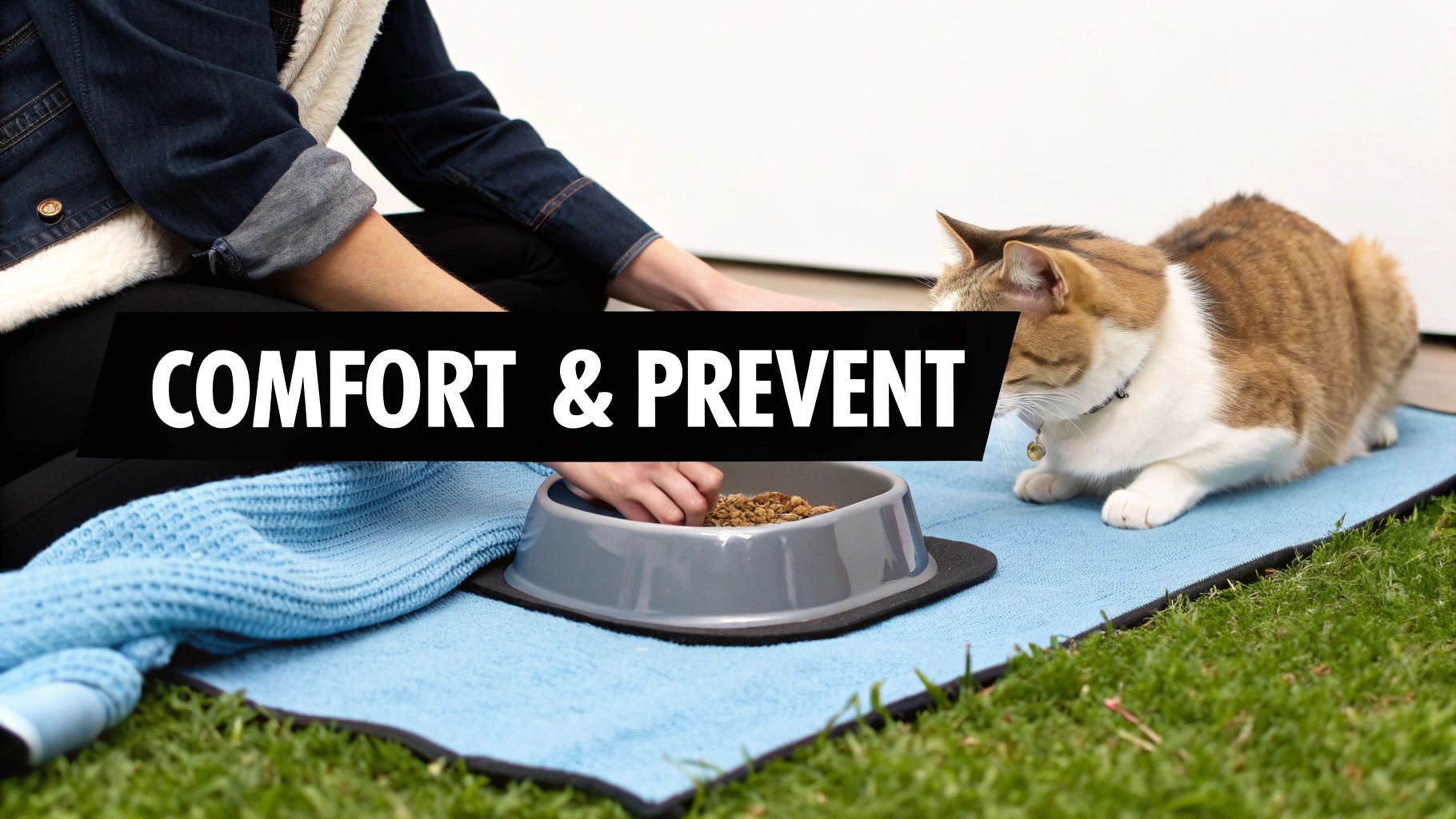
When your cat gets sick, your first instinct is to make them feel safe and comfortable. Once you've ruled out any serious red flags, there are a few gentle, practical steps you can take at home to soothe their stomach and keep the problem from coming back. It’s all about creating a supportive environment that helps their digestive system reset and recover.
The first thing to do is give their stomach a break. For a mild bout of vomiting, temporarily holding back their food for a few hours (but no more than 12) can give the inflammation in their GI tract a chance to settle down. Think of it as hitting the pause button.
But never withhold water. Dehydration is a real risk when a cat is vomiting, so make sure a clean, fresh bowl is always available. If they’re gulping down water only to bring it back up, try offering small amounts more frequently or even giving them a few ice cubes to lick.
Simple First Aid for an Upset Stomach
After their stomach has had a short rest, it’s time to reintroduce food—but do it cautiously. Instead of jumping right back to their normal food, a temporary bland diet can be incredibly soothing. It’s the feline equivalent of us having some chicken soup and crackers when we feel under the weather.
A simple, effective bland diet is just plain, boiled protein mixed with an easy-to-digest carb.
- Boiled Chicken: Make sure it's boneless, skinless, and cooked until tender. Shred it into tiny, manageable pieces.
- Plain Rice: White rice is typically easier on a cat's sensitive stomach than brown rice.
- Small Portions: Start by offering just a teaspoon or two. This tiny amount is less likely to overwhelm their system.
If your cat keeps that small meal down, you can offer another small portion a few hours later. Stick with this for a day or two before you start slowly mixing their regular food back in to transition them.
Key Takeaway: At-home care for mild vomiting is all about gentle support. By giving their system a rest and then offering a simple, bland diet, you create the perfect conditions for their digestive system to heal itself.
Proactive Strategies to Prevent Vomiting
Looking ahead, preventing future vomiting often comes down to tackling the common triggers we talked about earlier. With a few simple tweaks to your cat's environment and routine, you can make a huge difference in their digestive health.
One of the most frequent culprits is eating way too fast. To stop the notorious "scarf and barf," you can use a few simple tools to encourage a slower pace.
- Slow-Feeder Bowls: These have built-in mazes and obstacles that make your cat work around them, naturally slowing them down.
- Food Puzzles: These fun toys turn mealtime into a stimulating game, making your cat "hunt" for their kibble.
- Multiple Small Meals: Instead of one or two big meals, feeding smaller portions throughout the day keeps their stomach from getting overloaded.
Don't underestimate the impact of their environment, either. A calm, predictable home reduces stress, a known trigger for tummy troubles in sensitive cats. It's also wise to keep your home free of common irritants; airborne allergens can sometimes play a role in a cat's sensitivities. Learning about managing pet dander can create a healthier space for everyone.
Ultimately, the most powerful tool for prevention is diet. A high-quality food made with clean, easily digestible ingredients is foundational. If you think a food sensitivity might be the problem, a gradual switch to a new formula could be the solution. For more on this, check out our guide on finding the best cat food for digestion and supporting their long-term gut health.
Building a Foundation for Feline Gut Health
After digging into all the reasons your cat might be throwing up—from everyday hairballs to more serious health issues—one thing becomes crystal clear. While you can't control everything, you have a massive influence over one of the most important pieces of the puzzle: their diet. The foundation for long-term digestive health is built one meal at a time.
Think of your cat's gut as a delicate garden. When you feed it high-quality, easily digestible nutrients, that garden flourishes. Taking this kind of proactive approach to what goes in their bowl is your best defense against many common causes of vomiting.
The Power of Proactive Nutrition
Focusing on top-notch ingredients isn't just about dodging potential problems; it's about actively building a more resilient digestive system. When a cat's food is packed with clean, whole proteins and isn't loaded with mystery fillers or artificial junk, their system doesn't have to work so hard. This directly helps with many of the dietary triggers we talked about, like food sensitivities and poor-quality ingredients.
A simpler, cleaner diet means less stress on their entire GI tract. This can help keep inflammation down and support the good bacteria that live in their gut. A healthy gut is simply better prepared to handle life's little curveballs, like a hairball or a change in their routine, without needing to hit the eject button.
Investing in your cat's nutrition is one of the most impactful choices you can make. It’s a direct investment in their daily comfort, long-term health, and overall quality of life.
Creating a JoyFull Digestive Future
Choosing the right food is about laying down a foundation for wellness that will support your cat for years to come. By making clean, high-quality ingredients a priority, you're doing more than just filling their belly—you're nourishing their entire body from the inside out. This simple but powerful choice helps head off many of the issues that lead to that dreaded question, "Why is my cat throwing up?"
A well-supported gut is a happy gut. You can give this internal ecosystem an extra leg up by learning more about how beneficial bacteria work. For a deeper look, check out our guide on the best probiotics for cats.
Ultimately, getting proactive with your cat's diet helps you shift from just reacting to problems to actively preventing them, ensuring your furry friend can enjoy a comfortable, healthy life.
Got More Questions? We’ve Got Answers.
Even after reading a comprehensive guide, you’re bound to have some specific questions pop up, especially when you’re worried about your cat. Let’s tackle some of the most common concerns cat parents have when they’re trying to solve the mystery of "why is my cat throwing up?"
Is It Normal for a Cat to Vomit Hairballs Every Week?
Let's be clear: while hairballs are a byproduct of a cat's meticulous grooming, throwing them up every week is absolutely not normal. It's a big red flag.
Frequent hairballs often mean your cat's digestive tract isn't pushing things through as it should, pointing to a potential gastrointestinal motility problem. Sometimes, what looks like a simple hairball issue is actually a symptom of something more serious, like Inflammatory Bowel Disease (IBD). If hairballs are a constant battle in your house, it's time for a vet visit to see what’s really going on.
What's the Difference Between Yellow Bile and Undigested Food?
The contents of your cat's vomit can tell you a lot. Think of it as leaving clues for you and your vet to decipher. Each type points to very different potential issues.
- Undigested Food: Seeing a pile of barely-touched kibble? This usually means your cat is eating way too fast. It could also signal a food sensitivity or, more seriously, a blockage that’s preventing food from moving out of the stomach. This kind of vomiting typically happens right after a meal.
- Yellow Bile: A puddle of yellowish liquid is mostly stomach acid. This tells you your cat is vomiting on an empty stomach. Common culprits include acid reflux, pancreatitis, or simply waiting too long between meals, which lets that acid build up.
Key Insight: Taking note of what your cat is bringing up and when it's happening can give your vet a huge head start in diagnosing the real problem behind the vomiting.
Can Switching My Cat's Food Cause Vomiting?
Oh, absolutely. A sudden diet change is one of the top reasons for an upset stomach in cats. Their digestive systems are sensitive and need time to get used to new ingredients and protein sources. If you switch their food overnight, you’re practically inviting digestive chaos.
To avoid this, you need to transition them to a new food slowly. The gold standard is a gradual switch over 7-10 days.
- Days 1-3: Start with a mix of 75% old food and 25% new food.
- Days 4-6: Move to a 50/50 split.
- Days 7-9: Shift the balance to 25% old food and 75% new food.
- Day 10: You can now serve 100% of the new food.
This slow-and-steady approach gives their gut microbiome a chance to adapt, preventing the upset that leads to vomiting and making the switch a positive experience for everyone.
Here at Joyfull, we’re firm believers that a healthy gut is the cornerstone of a happy pet. Our recipes are built on clean, high-quality proteins that are easy on the digestive system, helping you create a foundation of wellness from the inside out. To support your cat's long-term gut health, take a look at our food at https://joyfullpet.com.
0 comments