A Pet Parent's Guide to Natural Dog and Cat Food
So, what does “natural” actually mean when you see it on a bag of dog or cat food? It’s a term that gets thrown around a lot, but thankfully, it’s not just marketing fluff.
The Association of American Feed Control Officials (AAFCO) has some clear guidelines. For a pet food to earn the "natural" label, its ingredients must come from plant, animal, or mined sources. The key is that they can't be produced by or subjected to a chemically synthetic process.
Think of it like this: an apple fresh off the tree is natural. An apple-flavored candy, created in a lab with artificial green coloring and synthetic flavor enhancers, is not. The same idea applies to what's in your pet’s bowl. Natural formulas stick with ingredients that are as close to their original, whole state as possible.
This is as much about what’s not in the food as what is. When you choose a natural pet food, you're consciously opting out of a few specific things that don't add any nutritional value and can sometimes cause problems.
- No Artificial Flavors: The delicious taste comes from real, high-quality ingredients like chicken or salmon, not from chemical additives designed to trick a pet into eating something they otherwise wouldn't.
- No Artificial Colors: You won’t find dyes like Red 40 or Yellow 5. The color of the kibble is simply the color of its real ingredients.
- No Synthetic Preservatives: The food stays fresh thanks to natural preservatives like tocopherols (which is just a form of Vitamin E), not chemical ones like BHA or BHT.
The Rise of Pet Humanization
Why is "natural" suddenly everywhere? It all comes down to a trend called "pet humanization." More and more, we see our pets as part of the family, not just animals we own. We want to give them the same quality of life—and food—that we'd want for ourselves.
This shift has completely changed the game. We're reading ingredient labels, asking tough questions, and looking for brands that share our commitment to wellness. It's no longer just about filling a bowl; it's about investing in their long-term health.
The numbers back this up. The global natural pet food market was already massive, valued at USD 15.3 billion in 2025, and is expected to climb to USD 23 billion by 2035. If you're curious, you can read more about the natural pet food market trends and see just how fast this movement is growing.
Choosing natural pet food is a proactive step toward providing clean, transparent nutrition. It's about feeding them real food derived from nature, free from the synthetic additives found in many conventional formulas.
To make it even clearer, let's break down the key differences between natural and conventional pet foods.
Quick Guide to Natural vs Conventional Pet Food
This table gives a quick, side-by-side look at what separates a natural formula from a standard, conventional one.
| Feature | Natural Pet Food | Conventional Pet Food |
|---|---|---|
| Protein Sources | Named meats (e.g., chicken, beef, salmon) | Often uses generic "meat meal" or by-products |
| Carbohydrates | Whole grains, vegetables (e.g., brown rice, sweet potatoes) | Often relies on refined grains and fillers like corn or wheat gluten |
| Preservatives | Natural sources like tocopherols (Vitamin E) or rosemary extract | May use synthetic preservatives like BHA, BHT, or ethoxyquin |
| Flavors & Colors | Derived from the ingredients themselves | Frequently contains artificial flavors and synthetic dyes |
| Ingredient Philosophy | Minimally processed, recognizable ingredients | May contain more heavily processed ingredients and additives |
Ultimately, the choice comes down to a simple philosophy: feeding our pets food that is as close to its natural state as possible, ensuring they get pure nutrition without the unnecessary extras.
How to Decode Pet Food Ingredient Labels
Stepping into the pet food aisle can feel like trying to read a foreign language. But that ingredient label on the back of the bag? That's your translation guide. Learning how to read it is the single most important skill you can have when picking out a natural dog and cat food. Don’t worry, you don’t need a degree in animal nutrition to become a label-reading pro.
The first rule is simple: ingredients are listed by weight, from heaviest to lightest. This means the first five to seven ingredients make up the vast majority of what's in the bag. A quick scan of just that top section tells you almost everything you need to know about the food's quality and the brand's philosophy.
When you see a high-quality, named protein source—like 'deboned chicken,' 'salmon,' or 'grass-fed beef'—listed first, you're on the right track. It’s a great sign that the company is committed to real, whole-food nutrition from the get-go.
Green Flags: Great Ingredients to See
Think of these as signs that a brand is putting genuine nutrition first, not just cutting costs. When you spot these on an ingredient panel, it’s a good hint that the recipe is built on a solid foundation.
- Named Whole Proteins: Look for specifics like 'chicken,' 'turkey,' 'lamb,' or 'salmon.' Vague is bad, specific is good.
- Named Protein Meals: Don't be scared off by terms like 'chicken meal' or 'salmon meal.' A "meal" is just a concentrated protein source where the water and fat have been rendered out, making it an incredibly nutrient-dense ingredient.
- Healthy Fats: Sources like 'chicken fat' or 'salmon oil' provide those crucial fatty acids for a shiny coat, healthy skin, and sharp brain function.
- Whole Fruits & Vegetables: Seeing ingredients like sweet potatoes, carrots, blueberries, and spinach means the food provides vitamins, minerals, and antioxidants from natural sources.
This simple flowchart can help you quickly figure out if a food is based on real ingredients or if it's propped up by artificial additives.
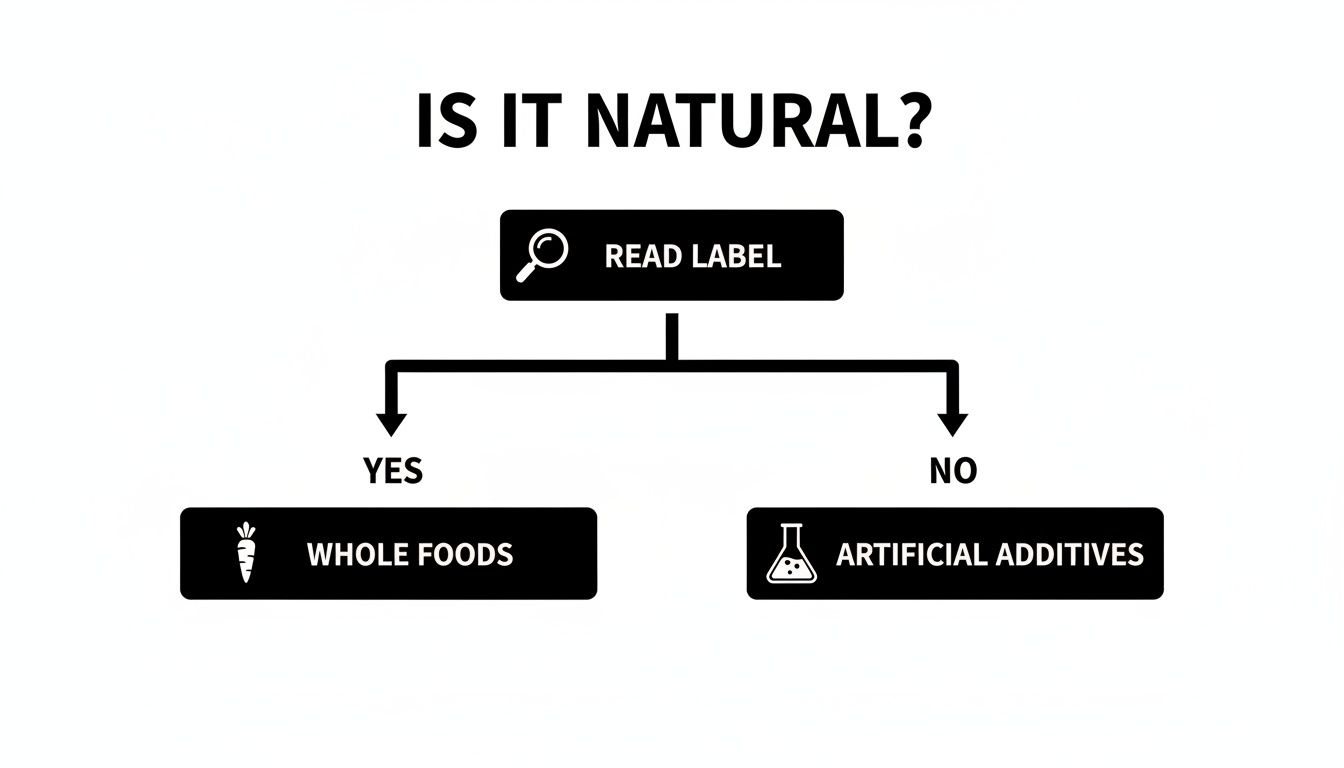
This just breaks down the label-reading process, guiding you to check for whole foods first as the best sign of a truly natural product.
Red Flags: Ingredients to Avoid
Knowing what to look for is only half the battle; knowing what to run from is just as important. These red-flag ingredients are often just cheap fillers or artificial additives that offer little to no real nutritional value for your pet.
The presence of vague, non-specific ingredients or synthetic chemicals is a clear sign that a food prioritizes low cost over high quality. A truly natural pet food has nothing to hide.
Keep an eye out for these common culprits:
- Vague Meat Terms: Ingredients like 'meat by-products' or 'animal meal' are a huge red flag. Because they aren't specific, they can legally include less digestible parts from any number of unknown animals.
- Cheap Grain Fillers: Corn (especially 'corn gluten meal'), wheat, and soy are often used to bulk up food and inflate the protein percentage on paper. Unfortunately, they're also common allergens and offer very little nutritional value for dogs and cats.
- Artificial Preservatives: Chemicals like BHA, BHT, and ethoxyquin are very effective at extending shelf life, but they’ve also been linked to a number of health concerns. High-quality natural foods use natural alternatives instead. For a deeper look, you can learn more about natural dog food preservatives and why they matter.
- Artificial Colors and Flavors: Dyes like Red 40 or Yellow 5 and synthetic 'bacon flavor' are completely unnecessary. They're only added to make the food look more appealing to you, not your pet, and have no place in a healthy diet.
The growing awareness around these ingredients is causing a major shift in the market. Valued at $8.1 billion in 2024, the U.S. natural pet food segment is projected to more than double to $16.4 billion by 2033 as more pet owners turn their backs on mass-market formulas.
By arming yourself with this knowledge, you can walk down any pet food aisle, confidently decode any label, and make an informed choice that supports the long-term health and happiness of your dog or cat.
The Building Blocks of a Healthy Natural Diet
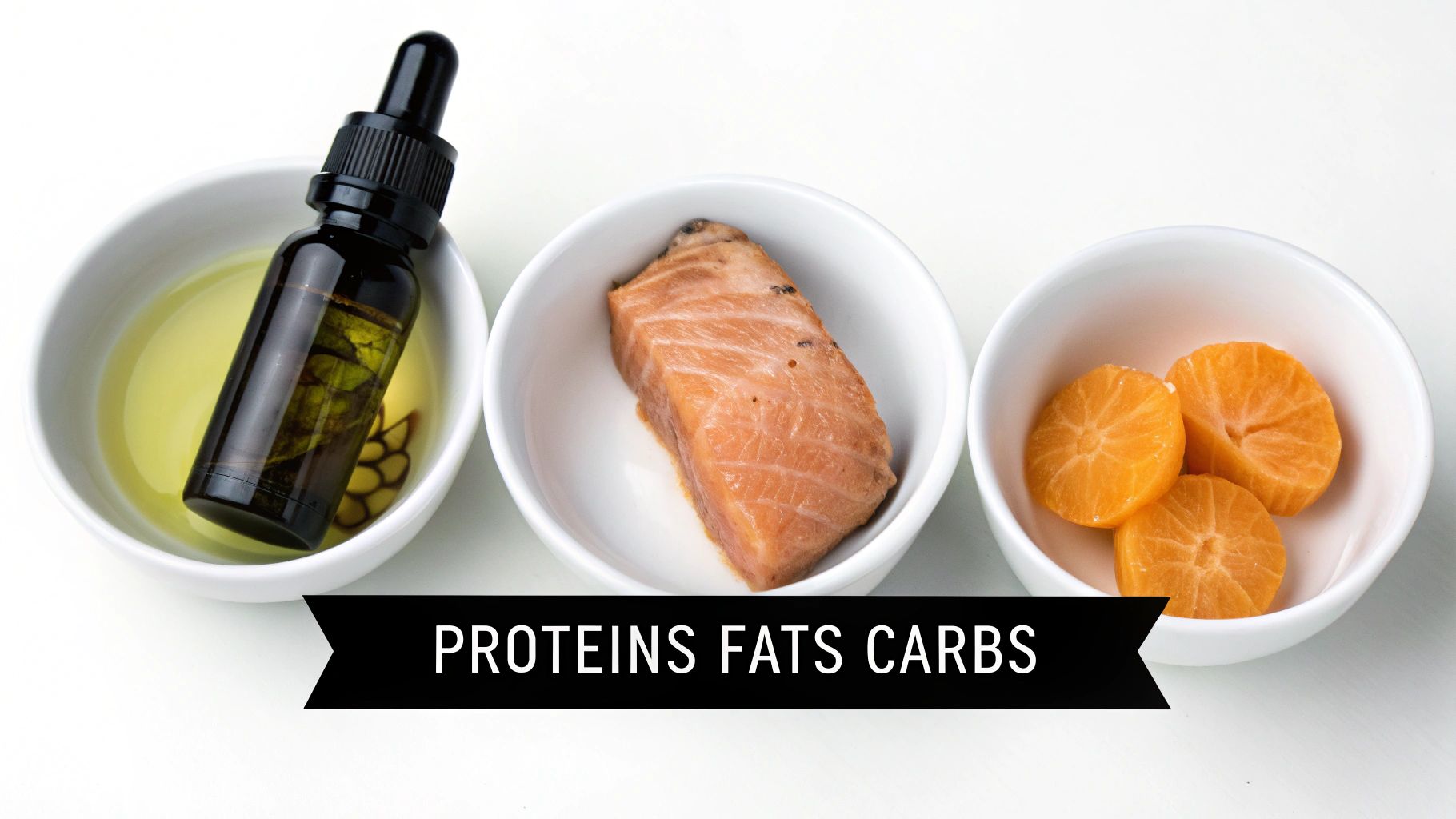
Now that we've covered the red-flag ingredients to steer clear of, let's talk about what should be in your pet's bowl. A truly healthy natural dog and cat food is built on a simple but powerful foundation: high-quality proteins, fats, and carbohydrates. Getting the balance and quality of these three macronutrients right is the secret to supporting your pet’s long-term health.
Think of it like building a house. Proteins are the bricks and mortar, creating strong muscles and repairing tissue. Fats are the electrical system, providing the dense energy needed to power everything and keep all the internal communications running smoothly. And wholesome carbohydrates? They're the extra power source, offering readily available energy for all their daily activities.
Each piece plays a critical role, and the quality of the materials you start with makes all the difference.
The Power of High-Quality Protein
Protein is, without a doubt, the cornerstone of your pet's diet, especially for our carnivorous friends. It's the essential nutrient for building muscle, repairing cells, keeping the immune system strong, and producing vital hormones and enzymes. But here’s the catch: not all protein is created equal.
The best, most beneficial proteins come from clearly named animal sources. When you scan an ingredient list and see things like ‘deboned chicken,’ ‘grass-fed beef,’ or ‘wild-caught salmon’ right at the top, that’s a great sign. These sources provide a complete amino acid profile that your pet's body can easily digest and put to work.
A pet's body is designed to thrive on animal-based proteins. Plant proteins, like those from corn or peas, are incomplete and less digestible, meaning your pet can't extract the full nutritional value. This is especially true for cats, who are obligate carnivores and have a biological requirement for nutrients found only in meat.
Essential Fats For a Healthy Mind and Body
Fats often get a bad rap in our own diets, but for our pets, they are a clean-burning fuel and a source of crucial nutrients. In fact, fats provide more than twice the energy of proteins or carbs, making them a powerhouse for active animals. They are also fundamental for absorbing key vitamins and maintaining healthy skin and a shiny coat.
What you really want to look for are foods rich in omega fatty acids. These are the superstars of the fat world.
- Omega-6 Fatty Acids: Found in chicken fat and sunflower oil, these are vital for growth, immune function, and skin and coat health.
- Omega-3 Fatty Acids: Sourced from things like fish oil (salmon or pollock are excellent) and flaxseed, these are famous for their powerful anti-inflammatory properties, supporting everything from brain health to mobile joints.
The right balance of these fats gives your pet a huge advantage, promoting everything from a sharp mind to comfortable movement. For a deeper dive, you can explore our complete guide to understanding ingredients in pet food and see exactly how each one contributes.
Demystifying Carbohydrates
Carbohydrates can be a confusing topic in the pet food world, but they absolutely have a place when you choose the right ones. The trick is knowing the difference between high-value complex carbs and cheap, starchy fillers. Low-quality fillers like corn, wheat, and soy offer very little nutritional benefit and are often the culprits behind common food sensitivities.
On the other hand, complex carbohydrates from whole-food sources bring a lot to the table.
- Sustained Energy: Ingredients like sweet potatoes, pumpkin, and carrots are digested slowly, providing a steady stream of energy without the dramatic blood sugar spikes.
- Dietary Fiber: These same ingredients are fantastic sources of fiber, which is absolutely essential for good digestion and regular bowel movements.
- Vitamins and Antioxidants: Whole vegetables and fruits also pack a nutritional punch with a whole range of vitamins, minerals, and antioxidants to support a robust immune system.
When chosen with care, carbohydrates aren't just "filler"—they’re a functional ingredient that fuels your pet's daily adventures and supports their overall well-being.
Why Dogs and Cats Have Different Nutritional Needs
When you're looking for a high-quality **natural dog and cat food**, it’s not just about picking a brand with a good reputation. It's about finding the right fuel for your pet’s unique biological engine. And while they might share your couch, dogs and cats have fundamentally different nutritional needs. You just can't use a one-size-fits-all approach.Here’s a good way to think about it: a high-performance race car and a rugged family SUV are both vehicles, but you wouldn’t dream of putting the same fuel in both. One is engineered for explosive speed and needs a highly specific fuel blend, while the other is built for versatility. The same idea applies perfectly to our pets.
These core differences are rooted in their evolutionary history and digestive systems. It's a tale of two very different dietary paths.
Cats Are Obligate Carnivores
Cats are what scientists call obligate carnivores. That’s not just a fancy term—it means they must eat meat to survive. Their entire anatomy, from their teeth to their digestive tract, is fine-tuned to process animal tissue for the specific nutrients they need to live.
- Taurine is Non-Negotiable: This is a big one. Cats can't produce enough taurine, an amino acid that’s absolutely critical for their heart, vision, and reproductive health. Their only real source for it is animal muscle tissue.
- A Need for Arachidonic Acid: Unlike dogs, cats can't create arachidonic acid (a vital fatty acid) from plant sources. They have to get it ready-made from animal fats to manage inflammation and maintain healthy skin and coats.
- High Protein Demand: A cat's metabolism runs on protein. They need about twice as much protein in their diet as a dog does just to maintain muscle and support basic bodily functions.
For these reasons, any natural cat food worth its salt must be packed with high-quality, animal-based protein. Plant-heavy formulas simply can't deliver what a cat needs to thrive.
Dogs Are Scavenging Omnivores
Dogs, on the other hand, fall into the scavenging omnivore camp. While they descended from carnivores, thousands of years of living alongside humans have given them a more adaptable digestive system. They do best on a meat-centric diet, but they can also digest and pull nutrients from certain plants.
This gives them a much more flexible diet. Protein is still the main event, but dogs can also use certain carbohydrates for energy and get great benefits from the fiber and vitamins in fruits and veggies.
The most crucial takeaway is that a cat’s nutritional needs are strict and meat-dependent, while a dog’s needs are more adaptable. A diet that is perfectly healthy for a dog could be dangerously deficient for a cat over time.
This idea of species-appropriate nutrition isn't just about dogs and cats, either. Every animal has a unique dietary blueprint. To see just how different nutritional needs can be, you can check out various species-specific nutritional guides that detail the precise requirements for animals like parrots, which is another world entirely.
Understanding this biological divide is the first step toward choosing a natural food that doesn't just fill your pet's bowl, but truly nourishes their body the way it was designed to be.
How to Safely Transition Your Pet to a Natural Diet

Making the switch to a high-quality natural dog and cat food is one of the best things you can do for your pet's health, but their digestive system needs a little time to catch up. A sudden food change, even to a much better one, can easily cause an upset stomach. The real key to success is taking it slow and steady over 7 to 10 days.
Think of your pet's gut as a finely-tuned ecosystem. The bacteria in there are used to breaking down their old food. When you introduce new ingredients, that ecosystem needs time to adapt. A gradual transition gives their gut bacteria a chance to adjust, making for a smooth, comfortable switch.
This simple, patient approach is the best way to avoid digestive issues like diarrhea or vomiting, ensuring the move to a better diet is a positive experience for both of you.
The 7 to 10 Day Transition Plan
The best method is to slowly mix the new natural food with their old food, gradually increasing the amount of new food each day. This step-by-step process removes any guesswork and sets your pet up for a seamless transition.
Here’s a simple schedule that works wonders:
- Days 1-3: Start with a mix of 75% old food and 25% new food. This just introduces the new taste and texture without overwhelming their system.
- Days 4-6: Shift to a 50/50 mix of old and new. Keep an eye on their stool during this phase to make sure it's firm and their digestion is on track.
- Days 7-9: Now, you'll flip the ratio to 25% old food and 75% new food. They’re almost there!
- Day 10: You’ve made it! You can now serve 100% new natural food.
For a deeper dive into the process, check out our guide on how to transition your dog to a new food, which has some extra tips.
Troubleshooting Common Transition Hurdles
Even with the most careful plan, you might hit a small bump in the road. Maybe your pet is a bit of a picky eater or seems hesitant to try the new stuff. Don't worry—that's completely normal.
A slow, patient transition is an act of care. It respects your pet's digestive biology and turns a potentially stressful change into a gentle and positive upgrade for their health.
Here are a few tricks that can help win them over:
- Warm It Up: Gently warming wet food or adding a splash of warm, pet-safe broth to dry kibble can really bring out the aroma and make it more enticing.
- Add a Healthy Topper: A small spoonful of plain pumpkin puree (not the pie filling!) or another healthy topper can be just the thing to get a picky eater interested.
- Stay Positive: Our pets are experts at reading our moods. If you're stressed, they'll feel it. Keep mealtimes calm and upbeat, and offer plenty of praise when they dig in.
This shift toward cleaner diets isn't just a small trend; it's a huge movement in how we think about pet wellness. The global organic pet food market hit USD 2.54 billion in 2024 and is expected to grow to USD 5.65 billion by 2033. It’s clear that pet parents everywhere are choosing to say no to synthetic additives.
Your Questions About Natural Pet Food, Answered
Even when you've done your homework on natural pet food, a few questions are bound to pop up. That's completely normal. Choosing the right food for your furry family member is a big decision, so let's tackle some of the most common things pet parents ask. We'll give you straightforward answers to help you feel confident in your choice.
Think of this as the final piece of the puzzle, addressing the practical concerns that come up when you're standing in the pet food aisle or browsing online, from decoding labels to understanding the price tag.
Is Grain-Free the Same as Natural?
This is easily one of the biggest points of confusion, so let's clear it up: no, they are not the same thing. While a lot of top-notch natural foods happen to be grain-free, the two terms focus on completely different parts of the recipe.
Here’s a simple way to think about it: "natural" is a philosophy about what’s kept out of the food—no artificial junk. "Grain-free" is just a specific recipe decision to leave out grains like corn, wheat, or rice. A food can be grain-free but still be loaded with artificial preservatives, which means it isn’t natural at all. On the flip side, a truly natural food might include high-quality whole grains like brown rice or oatmeal because they offer real nutritional benefits. The right choice always boils down to your individual pet’s health and any sensitivities they might have.
The term 'natural' is your guarantee against synthetic chemicals and artificial additives. 'Grain-free' is a dietary approach that may or may not be right for your pet.
Why Does Natural Pet Food Cost More?
It's true, natural dog and cat foods often have a higher price tag. That extra cost is a direct reflection of the quality and sourcing of the ingredients that go into the bag. It’s simply more expensive to create a recipe with premium, whole-food ingredients than it is to use processed fillers and mystery by-products.
So, where does that money actually go?
- Superior Proteins: Using named proteins like deboned chicken or wild-caught salmon costs a lot more than using vague "meat by-products" or cheap protein boosters like corn gluten meal.
- Whole Fruits and Vegetables: Adding real sweet potatoes, blueberries, and carrots for vitamins and fiber is a bigger investment than just dumping in cheap grain fillers.
- Natural Preservatives: It costs more to preserve food with natural antioxidants like mixed tocopherols (a form of Vitamin E) or rosemary extract than it does to use synthetic chemical preservatives like BHA and BHT.
You're paying for a food that’s more nutritionally dense and easier for your pet to digest. It’s an investment in a clean, transparent ingredient list and the peace of mind that comes with it.
Can a Natural Diet Help My Pet's Allergies?
For many pets, the answer is a resounding yes. Switching to a natural diet can bring huge relief for allergies and food sensitivities. A surprising number of these reactions in dogs and cats are triggered by the common, low-quality ingredients packed into conventional pet foods.
The usual suspects are often corn, wheat, soy, and the artificial colors, flavors, and preservatives that natural diets make a point to exclude. By getting these common irritants out of their bowl, you remove the potential triggers. What's more, many natural formulas are designed as limited ingredient diets, using fewer, higher-quality components. This makes it so much easier for you and your vet to figure out exactly what might be causing the problem. The focus on gentle, whole-food ingredients also helps calm the digestive system, which is key for a healthy gut and a strong immune response.
How Do I Know if a Brand Is Truly Natural?
With all the clever marketing out there, how can you tell which brands are genuinely walking the walk? The answer comes down to two things: transparency and verification. A trustworthy brand making natural dog and cat food has nothing to hide.
First, become a label detective. The ingredient list should be clear, specific, and written in plain English. Always look for an AAFCO nutritional adequacy statement on the bag. This is non-negotiable—it confirms the food is "complete and balanced" for your pet’s life stage. Reputable brands are also proud of their science and often have veterinarians or certified animal nutritionists on staff.
Finally, do a quick background check. Look up reviews from other pet parents and see if the company is open about where it sources its ingredients and how its food is made. A brand that’s confident in its quality will be happy to share that information. A truly holistic approach to pet care means being an informed consumer about everything that affects their well-being. For example, many devoted pet owners will research the ultimate guide to pet friendly couch covers to keep their home life harmonious. That same level of dedication should absolutely apply to what goes in their food bowl.
At JoyFull, we believe a healthy life isn’t just for humans—our pets deserve it, too. That's why every one of our formulas is created with clean ingredients, high-quality proteins, and is backed by scientific review from our in-house veterinary advisor. Explore our commitment to no-BS, genuinely beneficial pet wellness at https://joyfullpet.com.