Cat Won't Eat New Food? A Guide to Peaceful Food Transitions
It’s a classic cat owner conundrum: you bring home a new, carefully chosen food, convinced you’ve made the perfect choice, only to have your cat sniff it, turn up their nose, and walk away. Don't take it personally. This isn't just picky eating—it's hardwired into their DNA.
The secret to a successful switch is patience. A slow, gradual transition is non-negotiable. You’ll need to mix just a tiny bit of the new food into their old favorite, slowly increasing the ratio over 7 to 21 days. This slow-and-steady approach is the key to avoiding digestive upset and outright refusal.
Decoding Your Cat's Resistance to New Food
So, why the stubbornness? It’s not a critique of your shopping habits. A cat’s resistance to a new diet is a powerful survival instinct at play. Figuring out the "why" is the first step in getting them to "yes."
Cats are masters of routine, and many have a strong case of neophobia—a natural fear of anything new. In the wild, this skepticism keeps them safe from eating something poisonous. That unfamiliar smell in their bowl? It’s basically a giant red flag, triggering an ancient alarm that tells them something isn't right.
The Power of Scent and Early Habits
A cat's world revolves around their nose. Their sense of smell is incredibly sensitive, far more than our own, and it's their main tool for judging whether food is safe to eat. A minor change in ingredients that you can't even detect can smell like a completely different, and potentially dangerous, meal to your cat.
Habits formed in kittenhood also run deep. Cats often "imprint" on the textures and flavors they ate when they were young. A cat raised exclusively on dry kibble might find the soft, mushy texture of wet food totally bizarre and unappetizing.
"A cat that eats a favorite meal and then gets diarrhea or painful constipation... may blame the food and thereafter snub a previous favorite treat."
This kind of negative association is powerful. They aren't just being difficult; they're acting on deeply ingrained instincts that scream, "Stick to what you know is safe!" Of course, sometimes a refusal could signal a bigger problem. It’s always smart to know the common signs of food allergies in cats, as this can also be a root cause of food aversion.
A Growing Focus on Feline Nutrition
Wanting to switch foods usually comes from a great place. We know more about feline nutrition than ever, and pet parents are rightly invested in their cats' health. This isn't just a hunch; it's a global trend. In fact, two-thirds of cat owners now look for pet foods that reflect their own dietary values, prioritizing natural ingredients and targeted health benefits.
The pet food market is responding, with cat food sales now growing faster than dog food. You can learn more about this trend at Petfood Industry.
When you understand these deep-seated feline behaviors, the whole process changes. It stops being a battle of wills and becomes an exercise in patience, empathy, and outsmarting a very clever, very cautious little carnivore.
The Proven Slow Transition Method
Trying to switch your cat's food cold turkey is almost always a recipe for disaster. Think of it from their perspective—one day their trusted meal is there, the next it's replaced by something entirely unfamiliar. It’s no wonder they turn their nose up at it! The only reliable, vet-approved way to get a cat on board with a new diet is a slow, gradual introduction.
This isn’t about tricking them. It’s about giving their cautious nature and sensitive digestive system the time they need to adjust. Rushing this is probably the biggest mistake I see owners make. It often leads to vomiting or diarrhea, and once a cat associates a new food with feeling sick, you can bet they’ll avoid it like the plague from then on.
Patience is truly your best friend here. You have to let your cat set the pace.
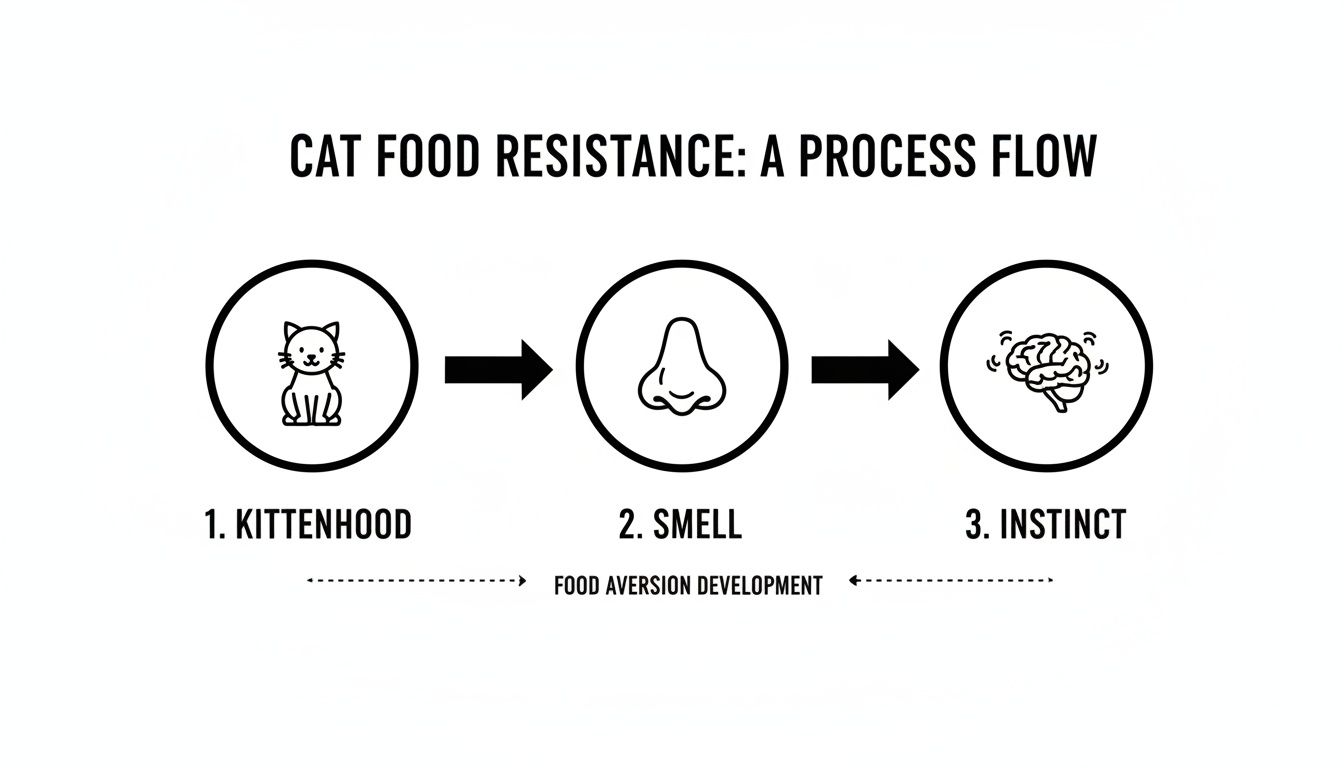
As you can see, a cat’s resistance to new food is deeply ingrained. Their early life experiences and powerful sense of smell create strong preferences. The key is to work with these instincts, not against them.
Choosing Your Transition Timeline
Every cat is an individual. A laid-back, food-motivated cat might be perfectly happy with a one-week transition. On the other hand, a senior cat set in their ways or one with a history of digestive issues might need a month or more. Your cat’s behavior is the ultimate guide.
Here are three tried-and-true schedules to get you started. Begin with the standard 7-10 day plan, but don't hesitate to slow things down if you see any signs of hesitation.
Cat Food Transition Schedules
Choose the schedule that best fits your cat’s personality and dietary history. Monitor your cat closely and adjust the pace as needed.
| Day Range | Standard Transition (7-10 Days) | Sensitive Cat Transition (14 Days) | Super-Sensitive Cat Transition (21+ Days) |
|---|---|---|---|
| Stage 1 | Days 1-3: 25% new food, 75% old food | Days 1-4: 25% new food, 75% old food | Days 1-7: 10% new food, 90% old food |
| Stage 2 | Days 4-6: 50% new food, 50% old food | Days 5-9: 50% new food, 50% old food | Days 8-14: 25% new food, 75% old food |
| Stage 3 | Days 7-9: 75% new food, 25% old food | Days 10-14: 75% new food, 25% old food | Days 15-21: 50% new food, 50% old food |
| Stage 4 | Day 10: 100% new food | Day 15: 100% new food | Days 22+: Gradually increase to 100% |
These percentages are just a starting point. If you notice your cat is picking out the old food and leaving the new, that’s your cue to hold steady. Don’t increase the ratio until they are consistently eating the entire mixture.
This slow-and-steady approach is critical. Cat owners are famously loyal to their brands—research shows that over half of them stick to just one. In fact, 37% only consider making a change when a health issue forces their hand. Given the high stakes of a potential hunger strike or digestive upset, this trusted, gradual method is your best bet for a successful switch. You can find more details in this report on global cat owner consumer trends.
A Real-World Transition Scenario
Let's walk through a common situation. Meet Leo, a stubborn 12-year-old cat who's eaten the same dry kibble his entire life. Now, his vet has prescribed a new therapeutic wet food for kidney health. Knowing Leo, the 21-day "Super-Sensitive" plan is the only way to go.
- Days 1-7: You start by mixing just a tiny bit—a single teaspoon, maybe 10% of the meal—of the new wet food into his beloved kibble. He gives it a suspicious sniff but, surprisingly, eats most of it. That’s a win!
- Days 8-14: Feeling confident, you increase the new food to 25%. But on day 9, Leo just licks the gravy off and leaves the rest. This is a clear signal to pause. You drop back to the 10% mix for a couple of days before trying the 25% ratio again, but this time you mash the wet food into the kibble so he can't pick it apart.
- Days 15-21: Success! He’s finally accepting the 25% mixture. You now cautiously move to a 50/50 ratio, and he eats it without protest for a full week.
Key Takeaway: The goal isn't to race through a calendar. It's about reading your cat's signals. Hitting the pause button or even taking a step back isn’t a failure—it’s just smart transitioning.
By being patient, you allowed Leo to slowly get used to a completely new smell, taste, and texture without the stress that so often leads to a full-blown food aversion. This observant, flexible method is your most powerful tool when your cat won't eat new food.
Making the New Food More Appealing
So you’ve got the perfect transition plan, but your cat is still turning up their nose. It happens. When you’re faced with a cat that won't eat new food, sometimes you have to think like they do and appeal directly to their senses. This isn’t about forcing them; it’s about making the new food seem absolutely irresistible.
Cats are creatures of scent. Their powerful sense of smell tells them whether something is safe and delicious. This is why a bowl of cold, wet food straight from the fridge often gets ignored. Their wild ancestors ate fresh prey at body temperature, and tapping into that instinct can make all the difference.
Engaging Your Cat's Senses
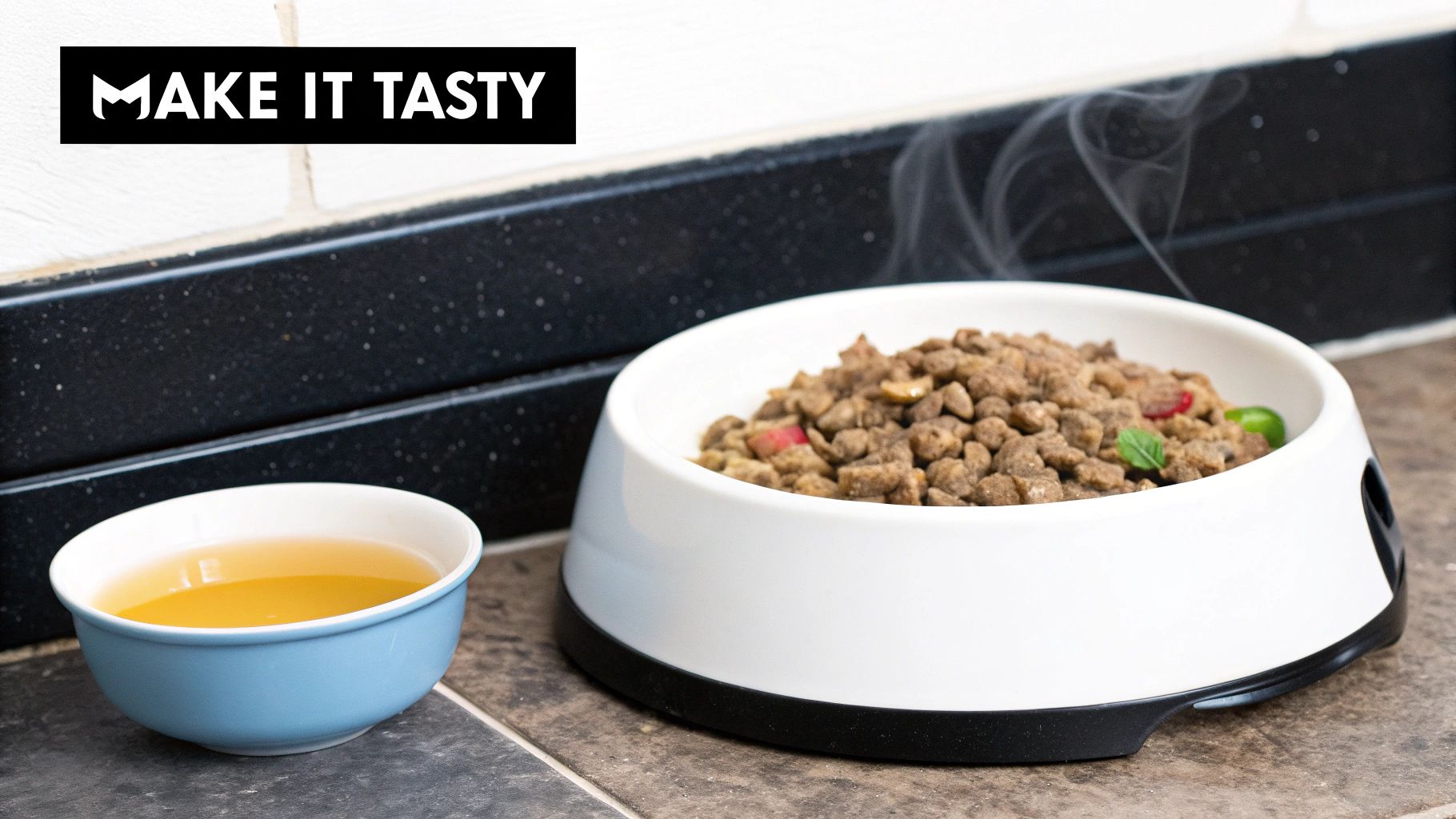
Gently warming wet food releases its aromas, making it far more tempting. It doesn’t take much. A few seconds in a microwave-safe bowl is often enough—just be sure to stir it thoroughly to get rid of any hot spots. Alternatively, you can place the food in a sealed baggie and let it sit in a bowl of warm water for a few minutes.
Dry food presents a different challenge: texture. For a cat used to a certain crunch, a new kibble might feel all wrong. Try adding a splash of warm, low-sodium chicken broth or even just plain water. This softens the kibble slightly and creates a fragrant gravy that can really pique their interest. I’ve seen this simple trick turn a boring bowl of pellets into a meal my own cat couldn't wait to eat.
Here are a few more tricks I've learned over the years:
- Try a Food Topper: A sprinkle of crushed, freeze-dried chicken or salmon is like catnip for the taste buds. These pure-protein treats are incredibly aromatic and can convince even the most stubborn cat to take a bite.
- Borrow a Familiar Scent: A dusting of nutritional yeast or FortiFlora (a probiotic that many cats find delicious) can mask the unfamiliar smell of the new food with something they already love.
- Add a "Gravy": A spoonful of the liquid from a can of tuna—make sure it's packed in water, not oil, with no salt added—is a flavor booster that most felines find impossible to resist.
Pro Tip: Never leave wet or moistened food out for more than an hour. Bacteria can multiply quickly, and if your cat gets sick, they may form a negative association with that food that’s incredibly difficult to overcome.
Optimizing the Dining Environment
Sometimes, the issue isn't the food at all, but the dining experience. A cat's surroundings play a massive role in their willingness to eat. Creating a feeding area that feels safe and comfortable can dramatically reduce mealtime stress.
Take a look at their bowl. Is it deep and narrow? If so, the sides might be pressing against their sensitive whiskers, causing a condition known as whisker fatigue. This discomfort can be enough to make a cat avoid their food entirely. Switching to a wide, shallow dish is a simple fix that often works wonders.
Location matters, too. A cat’s food and water should never be placed near their litter box—it’s a major instinctual turn-off for them. Their dining spot should be in a quiet, low-traffic area of your home where they won't be startled by sudden noises or feel threatened by other pets.
If you’re still hitting a wall, exploring the best cat food for picky eaters might give you some fresh ideas and options designed specifically for finicky felines. These small sensory and environmental tweaks all work together to build a positive experience, encouraging your cat to finally give that new food a fair chance.
Behavioral Tricks for Stubborn Eaters
So, you've warmed the food, mashed the texture, and you're still getting the cold shoulder. When a cat won't eat new food, it’s time to think beyond the bowl. The problem often isn't just about the taste; it’s about their deep-seated routines, instincts, and how they view mealtime.
First, let's talk schedule. If you’ve been free-feeding, stop. Shifting to distinct meal times—serving food at the same time every day—builds anticipation. Your cat learns to look forward to breakfast and dinner, which can make them a whole lot more open-minded about what’s actually on the menu.
Trigger Their Inner Hunter
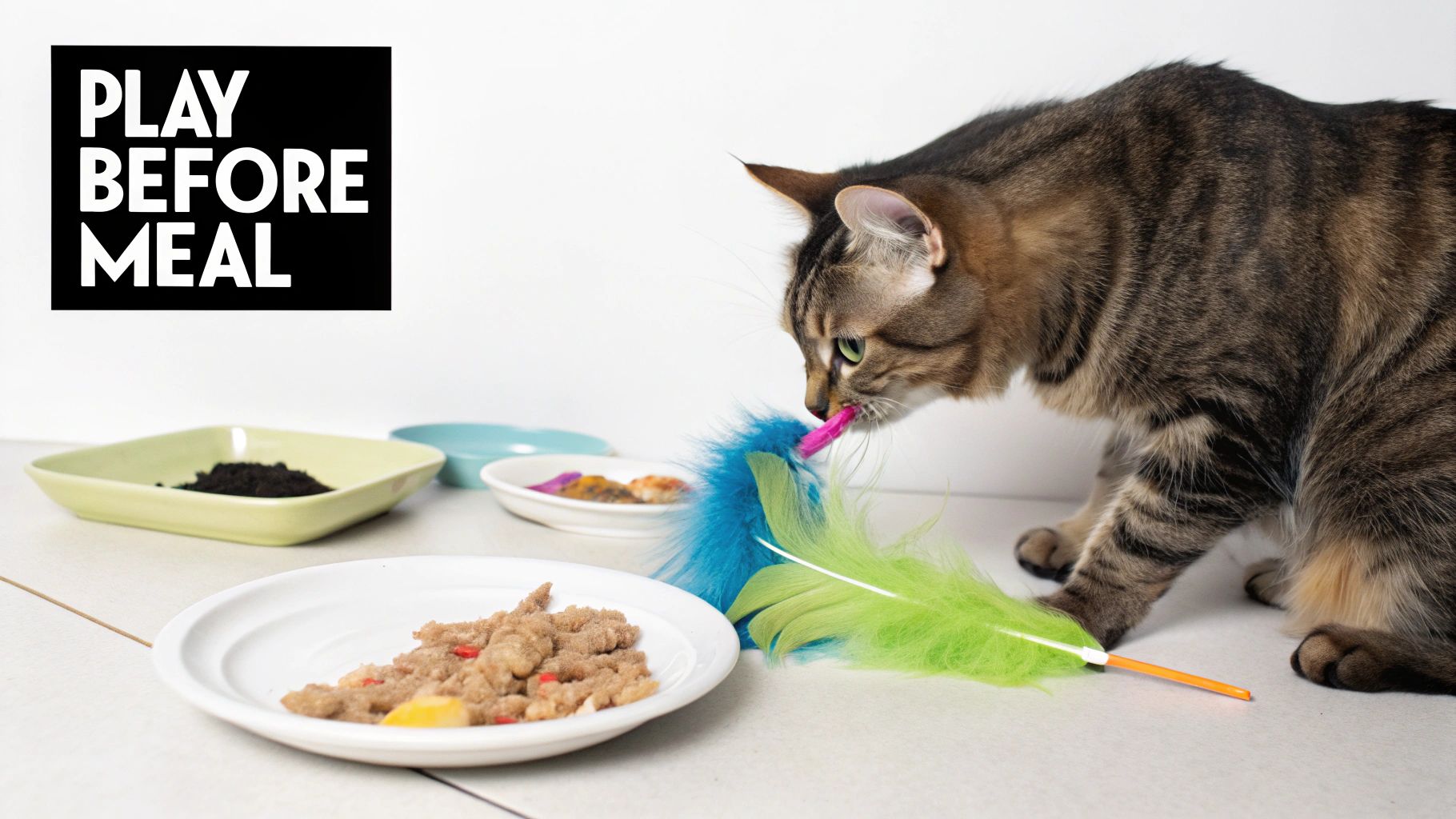
One of the best tricks I've learned is to tap into a cat's natural predatory cycle: hunt, eat, groom, sleep. A 10-15 minute play session right before you put the food down can work wonders. Grab a feather wand or their favorite toy and get them running, pouncing, and chasing.
This isn't just about burning off energy; it's about simulating a successful hunt. When you immediately present their food afterward, it completes that instinctual sequence. The meal becomes the satisfying "kill" at the end of the chase, making them far more likely to dig in.
Key Insight: Play is a powerful appetite stimulant. A good "hunt" makes the "feast" that follows feel natural and earned, which can override their suspicion of a new food.
Lower the Stakes with Low-Pressure Tactics
For the truly hardcore holdouts, even a little new food mixed into their old favorite feels like a betrayal. If that's your cat, try the "separate plate" method. It’s a game-changer.
- Serve their old food just like you always do, in their usual bowl.
- Next to it, place a tiny bit of the new food on a separate plate or saucer. I’m talking a few kibbles or a quarter-teaspoon of wet food.
- Then, just walk away. Don't hover or coax. Let their natural curiosity take over.
This approach removes all the pressure. Their "safe" meal is untouched, and this new thing is just... there. It’s an optional side dish they can sniff, lick, or ignore on their own terms. It gives them a sense of control, which is huge for a neophobic cat who’s wary of anything different.
It's completely understandable why we get so nervous about these transitions. The top reason owners stick with a brand is concern over their cat's health, worrying about everything from allergies to an upset stomach. You find something that works, and you don't want to rock the boat. You can find more data on these trends in the cat food market insights from Grand View Research. But by using these little psychological tricks, you're working with your cat's cautious nature, not fighting against it.
Knowing When to Call Your Veterinarian
While most food transitions just take a bit of patience and strategy, it's absolutely crucial to know when a cat refusing food is more than just a behavioral quirk. Sometimes, it's a red flag for an underlying health problem that needs a vet’s attention, and fast.
Learning to tell the difference between a picky eater and a sick cat is one of the most important skills you can have as a cat owner. Spotting the signs early means you can get your friend the help they need right when they need it most.
Critical Red Flags for a Vet Visit
If your cat is turning up their nose at their new food but you also see any of the following signs, stop the transition and call your vet immediately. Don't wait.
- Complete Food Refusal: Your cat hasn't eaten anything at all for more than 24 hours. This is a hard and fast rule; a full day without food is a serious warning sign.
- Persistent Vomiting or Diarrhea: A single upset stomach can happen. But if it's happening repeatedly, something is wrong. Our guide explains in more detail why a cat might be throwing up and what to look for.
- Significant Weight Loss: Can you suddenly feel their ribs or spine more easily than before? Has the scale shown a noticeable drop? This is a major concern.
- Extreme Lethargy: Your cat just isn’t themselves. They might be hiding away, sleeping constantly, and showing zero interest in their favorite toys or your attention.
- Changes in Litter Box Habits: Pay close attention to any straining to urinate, not producing any urine, or other major changes in their stool.
- Signs of Pain: Dental pain is a very common reason for a cat to suddenly stop eating. Watch for things like drooling, pawing at their mouth, or dropping food while they're trying to chew.
The Dangers of Anorexia in Cats
When a cat completely stops eating, their body is forced to start breaking down fat stores for energy. The problem is, a cat's liver simply can't process this rapid flood of fat. This can quickly lead to a severe and life-threatening condition called hepatic lipidosis, otherwise known as fatty liver disease.
An overweight cat can start developing hepatic lipidosis after just two days of not eating. This condition is a true medical emergency and often requires hospitalization and intensive care to reverse.
Never, ever take a "wait and see" approach if your cat stops eating entirely. The transition tactics we've covered are fantastic for a finicky but otherwise healthy cat, but they are no substitute for professional medical care.
If your gut tells you something is truly wrong, listen to it. Trust that instinct and call your veterinarian.
Common Questions About Switching Cat Food
Even the most carefully planned food transition can hit a few bumps. It’s totally normal to have questions when you’re staring down a cat who’s turned up their nose at a new meal. Let’s tackle some of the most common hurdles cat parents face.
How Long Is Too Long for a Cat to Refuse Food?
This is the big one, and the answer isn't flexible. If your cat hasn't eaten anything at all for a full 24 hours, you need to call your vet. Immediately. This isn't just about a hungry kitty; it's a serious medical red flag.
When a cat stops eating, especially an overweight one, they can quickly develop a life-threatening liver condition called hepatic lipidosis, or fatty liver disease. Don't wait around for another day hoping they'll come around. A 24-hour hunger strike is your cue to get professional help.
Is It Okay to Just Mix Two Foods Forever?
Some people do this, but I generally advise against it as a long-term plan. Think about it: if your cat suddenly develops an upset stomach or an itchy skin allergy, how will you know which food is the culprit? It makes troubleshooting a potential health issue nearly impossible.
Mixing can also throw their diet out of balance if the two foods have very different nutritional makeups. The best-case scenario is finding one high-quality food that your cat loves and does well on. It simplifies everything and gives you a clear baseline for their health.
Key Takeaway: Consistency is your best friend. A single, stable diet makes it much easier to spot and solve any health problems that might pop up down the road.
My Cat Only Licks the Gravy. What Do I Do?
Ah, the classic "gravy fiend." This happens all the time with wet food, and it’s no wonder—the gravy is where all the good smells are! The goal here is to outsmart their selective licking by changing the food's texture.
- Mash it up: Take a fork and really work those solid bits into the gravy until you have something closer to a pâté. This makes it much harder to pick and choose.
- Create more "gravy": A tiny splash of warm water can thin the food and coat the chunks, making the whole dish more appealing.
- Warm it slightly: A few seconds in the microwave can make the solid food just as fragrant and enticing as the gravy itself.
If none of these tricks do the trick, you might just have a cat with a major texture preference. In that case, it might be time to try a food that's already a smooth pâté from the get-go.
Is Switching Flavors a Bad Idea?
Not at all, as long as you're smart about it. Rotating between different proteins—say, chicken one week and salmon the next—within the same brand and product line is actually a great idea. It provides a little variety and might even help sidestep the development of food sensitivities.
The real trouble starts when you're constantly jumping between different brands or formulas without a transition. That’s a recipe for digestive upset. The key is to keep the formula consistent, even if the flavor changes.
At Joyfull, we believe your pets deserve the best. Our formulas are created with clean ingredients and high-quality proteins to support a healthful life for the pets you love. Explore our products to find a meal your cat will adore.