Cat Food for Hairball Control A Complete Guide
Finding a soggy, cigar-shaped clump of fur on your favorite rug is one of the less glamorous parts of being a cat parent. While we often dismiss it as "normal," frequent hairballs can be a sign that something is a little off in your cat's digestive system.
The best cat food for hairball control is designed to tackle this problem from two angles. First, it helps improve skin and coat health to reduce shedding. Second, it uses key ingredients like fiber and healthy fats to help any swallowed fur pass smoothly through the digestive tract, not back up onto your floor.
Understanding the Problem with Cat Hairballs
Let’s get real for a moment—hairballs are gross. But more than just a mess to clean up, they can point to an underlying digestive traffic jam.
Think of your cat's gut as a highway. When things are running smoothly, the hair they swallow during their constant grooming just keeps moving along with everything else and exits naturally. But if that highway gets congested and traffic slows down, the fur can get stuck, clump together, and cause a blockage that the body has no choice but to expel.
Why Hairballs Form
You're not alone in this battle. Hairballs are a surprisingly common issue, affecting up to 85% of cats at some point in their lives. The problem is often magnified in long-haired breeds like Persians and Maine Coons, who simply have more fur to swallow. We dive deeper into this in our guide on what causes hairballs in cats.
The core of the hairball problem often boils down to a slowdown in the digestive process. A healthy gut keeps ingested fur moving, but a sluggish system lets it tangle into a mass that can only be expelled one way—up.
So, what causes this digestive slowdown? It usually comes down to a few key factors:
- Dehydration: Not enough water can make it difficult for things to move through the intestines.
- Poor Diet: Food loaded with fillers instead of high-quality fiber won't do much to encourage healthy gut motility.
- Excessive Shedding: A dry, unhealthy coat means more loose fur gets swallowed during grooming.
The great news is that you have a powerful tool at your disposal to manage this from the inside out: your cat’s diet. By choosing the right cat food for hairball control, you can support your cat's digestive health and make those unpleasant surprises a thing of the past.
Here is the rewritten section, designed to sound like an experienced human expert:
How Nutrition Fights Hairballs From Within
Specialized hairball-control cat food isn't just a marketing gimmick; it's a strategic nutritional plan that tackles the problem from the inside out. Instead of just cleaning up the aftermath, the right diet gets to the root causes of why hairballs form in the first place. It’s a proactive approach that works on a few different levels to keep your cat’s entire digestive system happy and moving.
Think of it as a three-part strategy built right into their daily meals. The goal is to first reduce how much fur they swallow, then help any ingested fur pass smoothly, and finally, make sure their whole digestive system is running like a well-oiled machine.
Strengthen the Coat to Reduce Shedding
Your first line of defense is simply to minimize the amount of loose fur your cat swallows while grooming. A stronger, healthier coat naturally sheds less, and that’s where high-quality protein and specific fats make a huge difference.
- High-Quality Protein: Did you know your cat's fur is about 95% protein? It makes sense, then, that highly digestible protein sources like chicken, turkey, or fish provide the essential building blocks for strong hair follicles that don't let go of fur so easily.
- Omega Fatty Acids: Omega-3 and Omega-6 fatty acids are absolute powerhouses for skin health. They help keep the skin hydrated and reduce the kind of dryness and inflammation that can lead to excessive shedding. Think of it like this: a well-moisturized skin barrier anchors hair much more securely.
Promote Digestive Flow with Fiber
Even with the glossiest coat, your cat is still going to swallow some fur. The next job is to make sure that hair keeps moving right on through the digestive tract instead of wadding up in the stomach. This is where dietary fiber becomes the unsung hero.
The right blend of fiber essentially acts as a gentle escort for swallowed fur. It binds to the hair and sweeps it through the intestines, allowing it to pass safely in the litter box instead of coming back up as a soggy mess on your carpet.
Specific fiber sources like beet pulp, psyllium husk, and cellulose are particularly good at this. They add just enough bulk to the stool and encourage gut motility—the natural muscular waves that push everything through the digestive system. A diet with the right fiber keeps the internal plumbing from getting clogged.
Support Overall Gut Health
Finally, a truly effective diet supports the entire digestive ecosystem. When your cat's gut is healthy and balanced, it's far better at handling challenges like a bit of ingested fur. Key vitamins, minerals, and antioxidants play a crucial role here, helping to maintain a strong intestinal lining and support the good bacteria that are essential for digestion.
This is exactly why we've seen such a big focus on targeted nutrition in recent years. The global pet food industry, projected to hit $152.9 billion, has made incredible strides in creating formulas for specific health needs. In fact, feeding trials have shown that a quality cat food for hairball control can cut down on hairball incidents by up to 50% in as little as 30 days. You can dig deeper into these industry trends and the science behind specialized pet nutrition to see just how far we've come.
Decoding the Ingredient Label for Hairball Control
Walking down the cat food aisle can feel pretty overwhelming. You're faced with dozens of bags, and every single one claims to be the best for your furry friend. When you're looking for a cat food for hairball control, the trick is to become a bit of a label detective. It's less about the flashy marketing on the front and more about understanding the science behind the formula listed on the back.
Think of the ingredient list as your roadmap. By law, ingredients are listed by weight, meaning the first few items are what make up the bulk of the food. For any cat, that first ingredient should always be a high-quality, named animal protein.
This diagram really simplifies how nutrition can tackle hairballs right from the source.
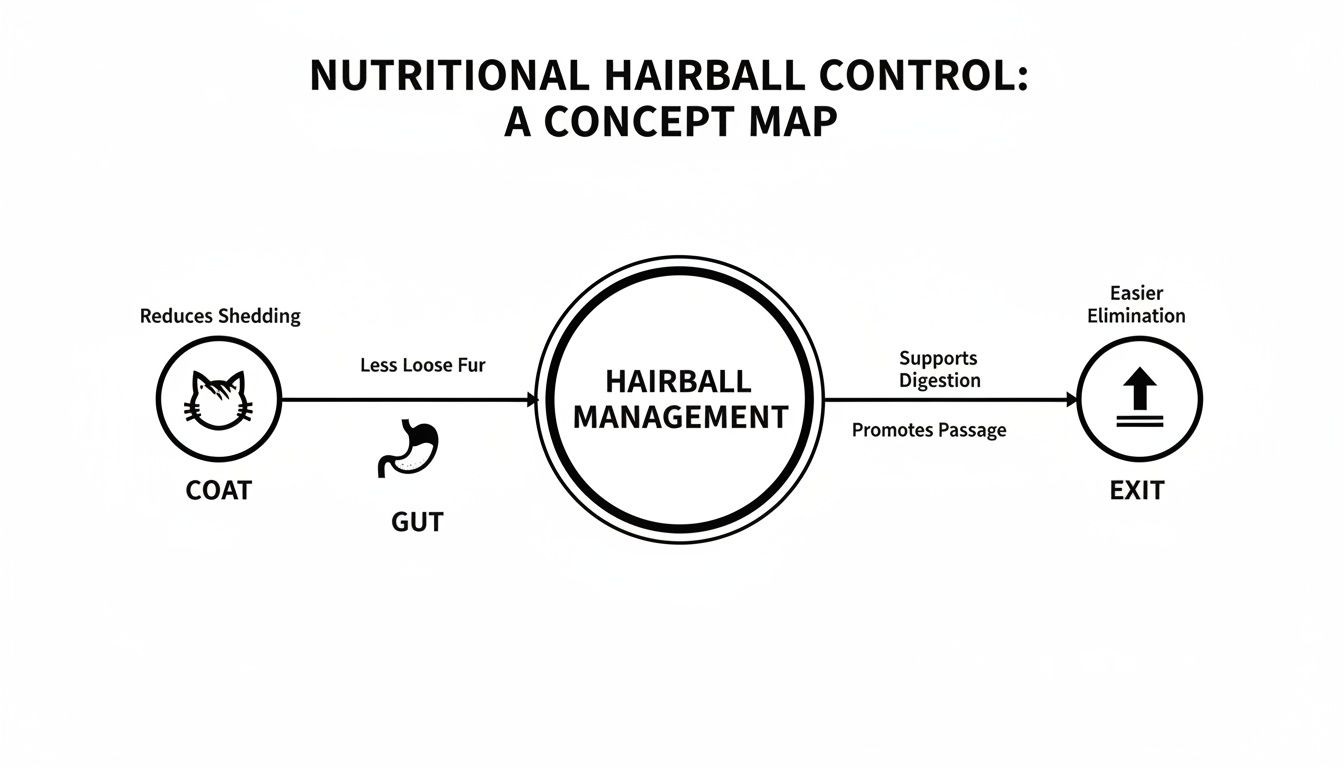
As you can see, a solid hairball strategy is all about a three-step process: it starts with building a healthy coat, moves to supporting the gut, and finishes by making sure everything passes through smoothly.
Key Ingredients in Hairball Control Cat Food
So, what should you actually be looking for? The table below breaks down the heavy hitters in a great hairball formula and explains exactly what they do.
| Ingredient | What It Does | Why It Matters for Hairball Control |
|---|---|---|
| High-Quality Animal Protein | Provides essential amino acids to build strong hair follicles and skin. | A healthy coat sheds less. Less shedding means less hair for your cat to swallow during grooming. |
| Omega Fatty Acids (3 & 6) | Hydrates the skin and strengthens fur, giving it a healthy sheen. | Reduces dry, flaky skin and brittle hair, which can contribute to excess shedding. |
| Insoluble Fiber (e.g., cellulose) | Adds bulk to the stool and helps push contents through the digestive tract. | Acts like a "scrub brush," grabbing ingested hair and moving it along to be passed in the litter box. |
| Soluble Fiber (e.g., pumpkin, psyllium) | Forms a gel-like substance in the gut, slowing digestion for better nutrient absorption. | This "gel" helps lubricate the digestive tract, allowing the hair to pass through more easily. |
| Probiotics & Prebiotics | Supports a healthy balance of beneficial gut bacteria. | A healthy gut microbiome is crucial for overall digestive efficiency and regular motility. |
These ingredients work together, creating a system that not only manages the hair your cat swallows but also helps reduce the amount of hair they shed in the first place.
The Must-Have Ingredients
When you flip that bag over, your mission is to find a formula built on a foundation of high-quality, easily digestible ingredients. These are the non-negotiables that support both a healthy coat and a smoothly running digestive system.
- High-Quality Protein First: Look for specific protein sources like "chicken," "turkey," or "salmon" right at the top of the list. Since fur is made of protein, providing easily digestible sources gives your cat the building blocks needed for a strong, healthy coat that sheds less.
- A Smart Fiber Blend: Fiber is the undisputed champion of hairball control. It’s the natural broom that sweeps swallowed fur safely through the intestines. You want to see a mix of soluble and insoluble fibers from sources like beet pulp, pumpkin, psyllium husk, or cellulose. For dry food, a crude fiber content between 8-10% is usually the sweet spot.
An effective hairball formula doesn’t just toss in random fiber; it uses a purposeful blend. Think of it like a highway system—insoluble fiber is the pavement that keeps things moving, while soluble fiber is the traffic control that ensures a smooth, steady flow.
To dive deeper into what makes an ingredient truly beneficial, take a look at our guide on the best ingredients for cat food.
Red Flags to Avoid on the Label
Just as important as what's in the food is what's left out. Certain ingredients can actually hinder digestion, completely defeating the purpose of a specialized diet. These are often cheap fillers that offer little nutritional value and can sometimes make digestive issues even worse.
Try to steer clear of formulas that are heavy on:
- Vague Meat Terms: Ingredients like "meat by-products" or "animal digest" are a red flag. They're ambiguous, and you deserve to know exactly what kind of protein your cat is eating.
- Excessive Fillers: Things like corn gluten meal, wheat gluten, and soy are often used to cheaply inflate the protein percentage on the label, but they are far less digestible for many cats than quality animal-based proteins.
- Artificial Additives: Artificial colors, flavors, and preservatives bring nothing to the table in terms of health and can be potential irritants for cats with sensitive systems.
By prioritizing high-quality protein and a functional fiber blend—while avoiding those cheap fillers—you can confidently choose a food that helps solve the hairball problem from the inside out.
Lifestyle Tips to Support a Hairball-Free Cat
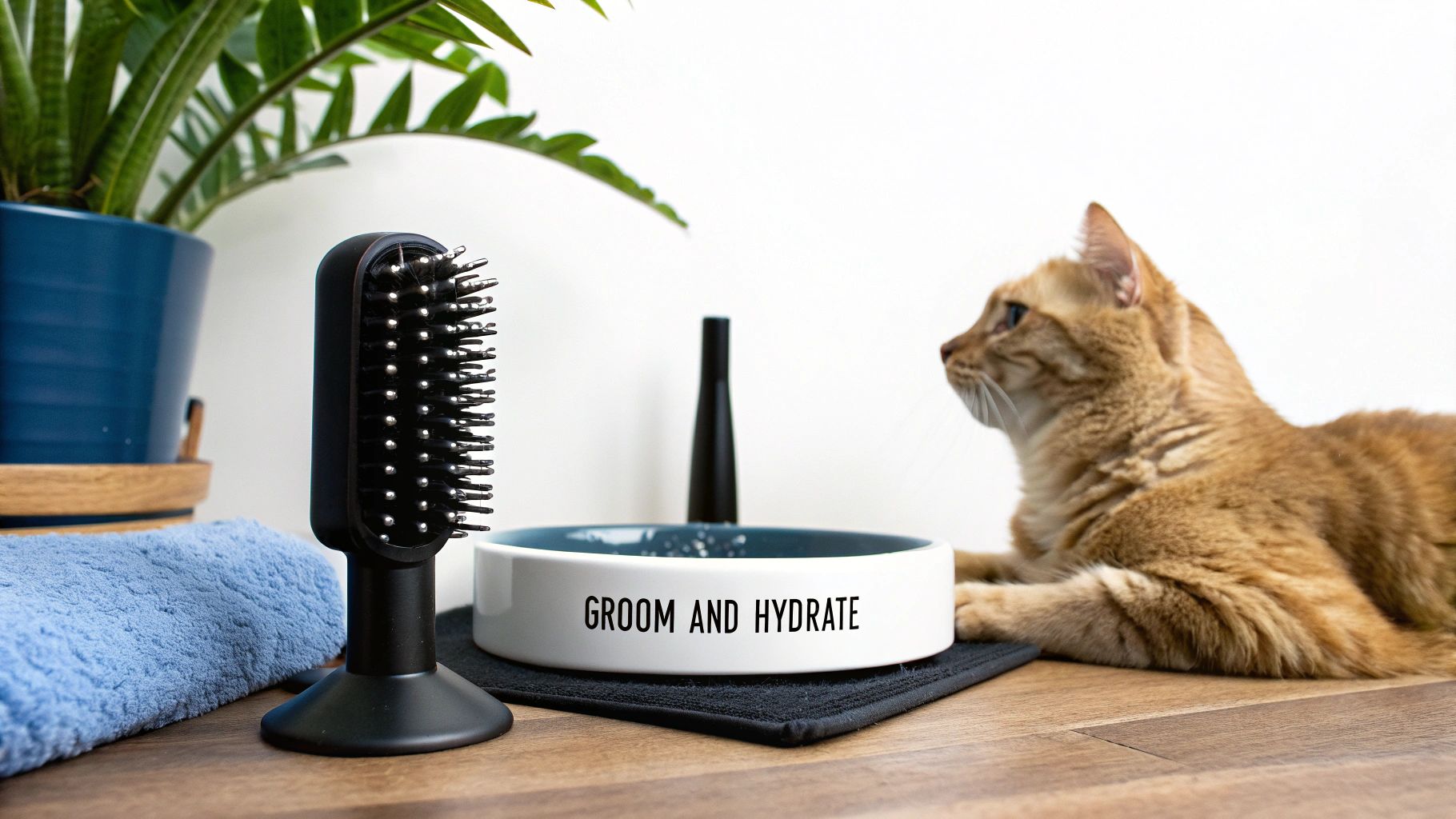
Choosing the right cat food for hairball control is a huge first step, but it’s most powerful when paired with a few smart lifestyle habits. Think of it like this: the food works from the inside out, while these tips tackle the problem from the outside in.
When you combine a great diet with proactive care, you create a holistic system that helps keep your cat comfortable and your floors clean.
Make Grooming a Daily Ritual
The simplest way to stop a hairball is to catch the fur before it ever gets ingested. Daily brushing is non-negotiable, especially if you have a long-haired cat. Just a few minutes with a good brush removes an incredible amount of loose hair that would otherwise end up in your cat's stomach.
Plus, it's a great way to bond with your cat while actively reducing the strain on their digestive system. For more ideas, check out our guide on how to reduce cat shedding.
Boost Hydration at Every Opportunity
Water is the unsung hero of hairball prevention. A well-hydrated digestive tract is slick and efficient, helping ingested fur pass right through. The catch? Cats are notoriously poor drinkers, so we have to get a little creative.
- Try a water fountain. The sound and movement of running water are often irresistible to cats.
- Serve wet food. Every bite of wet food is a source of moisture, making it a fantastic way to hydrate them at mealtime.
- Spike their kibble. A little splash of water or some low-sodium bone broth mixed into dry food is an easy win.
Think of water as the lubricant for your cat's internal plumbing. A well-hydrated system allows fur to slide through easily, while a dehydrated one creates friction, giving hair a chance to get stuck and form a clump.
Encourage Play and Reduce Stress
A good play session is more than just fun and games—it’s also great for digestion. Physical activity helps stimulate the muscles in the gut, keeping everything moving along smoothly.
It's also important to remember that a stressed or bored cat might start to over-groom as a way to self-soothe. This compulsive licking means they swallow a lot more fur. Regular, engaging playtime keeps them happy, stimulated, and less likely to fall into that habit.
These aren't just minor suggestions. Veterinary data shows that a staggering 90% of cats over one year old deal with hairballs annually. In severe cases, this can lead to blockages requiring expensive surgery. It’s no surprise that hairball formulas now represent 10-15% of all cat food sales in North America. This isn't just a nuisance; it's a major focus in feline health.
When It’s Time to See a Veterinarian About Hairballs
Switching to a high-quality cat food for hairball control is a fantastic first line of defense. But it's just as important to know when a hairball problem is pointing to something more serious. An occasional coughed-up furball is just part of life with a cat, but if it's happening all the time or seems distressing, that’s a clear signal to get a professional opinion.
Sometimes, what we assume is "just a hairball" is actually a symptom of an underlying health issue. Conditions like inflammatory bowel disease (IBD), food sensitivities, or even a dangerous internal blockage can all masquerade as a simple hairball problem. Your vet is the only one who can get to the bottom of it and make sure you're on the right track.
Critical Signs That Warrant a Vet Visit
Don't wait. If you see any of the following signs, it's time to call your veterinarian immediately. These go beyond typical hairball behavior and could indicate a true emergency.
- Constant, Unproductive Retching: This is a big one. Your cat is trying over and over to vomit, but nothing comes out. It’s a classic sign that something might be stuck.
- Loss of Appetite and Lethargy: A cat who suddenly refuses to eat or is acting unusually tired and withdrawn is telling you something is wrong. Trust that instinct and get them checked out.
- Significant Litter Box Changes: Keep an eye out for constipation (straining in the box with little or no result) or persistent diarrhea. Both can signal a major digestive problem.
- Painful or Swollen Abdomen: If your cat's belly looks bloated or they yelp or flinch when you touch it, this is an emergency.
Think of your vet as your co-pilot in managing your cat's health. While a premium diet is the foundation of wellness, professional guidance is essential for navigating unexpected turbulence and ensuring a safe journey.
At the end of the day, your veterinarian is your most trusted partner. They can provide a definitive diagnosis and map out a plan, whether it involves a specific diet, medication, or other treatments. While the right food is a powerful tool, it never replaces the need for professional veterinary care when your cat’s health is on the line.
Your Checklist for Choosing the Right Hairball Food
Standing in the pet food aisle can feel a little overwhelming, right? With so many choices, it's tough to know which bag is best. But once you know what to look for, you can make a confident choice for your cat.
I've boiled everything down into a simple checklist to take the guesswork out of it. Think of this as your cheat sheet for your next shopping trip. It'll help you see past the flashy marketing on the front of the bag and get to the good stuff in the ingredient list.
The Five-Point Food Inspection
Before any bag of cat food makes it into your cart, give the label a quick five-point inspection. This simple scan tells you almost everything you need to know about what's really inside.
-
Protein First, Always: The very first ingredient should be a high-quality animal protein you can name, like chicken, turkey, or salmon. This is the cornerstone of a healthy coat that sheds less. No exceptions.
-
Find the Functional Fiber: Scan the ingredient list for a smart blend of fiber. You want to see things like pumpkin, beet pulp, psyllium husk, or cellulose. These are the ingredients that help keep everything moving smoothly, taking ingested hair along for the ride.
-
Check for Skin & Coat Boosters: A truly great formula will include omega-3 and omega-6 fatty acids. These are the healthy fats that lead to hydrated skin and a shiny, strong coat, which cuts down on shedding in the first place.
-
Dodge the Empty Fillers: Keep an eye out for and avoid foods packed with cheap fillers like corn gluten meal, wheat gluten, or soy. These ingredients don't do much for your cat nutritionally and can sometimes get in the way of smooth digestion.
-
Say No to Artificial Junk: A clean label is a healthy label. The food should be free from artificial colors, flavors, and unnecessary chemical preservatives that might just irritate your cat's system.
Choosing the right food is one of the most impactful decisions you can make for your cat's health. This checklist empowers you to look beyond the front of the bag and understand the science on the back, ensuring your choice actively works to prevent hairballs.
Of course, diet is just one piece of the puzzle. You might also want to look into other comprehensive pet supplies that can round out your hairball prevention strategy. When you combine a great diet with the right grooming tools and ways to encourage hydration, you’ve got a powerful, holistic plan for a hairball-free home.
Got Questions About Hairball Control Diets?
Making the switch to a new cat food always brings up a few questions. Knowing what to expect can help make the whole process a lot less stressful for you and your cat. Let's dig into some of the most common things people wonder about when starting a cat food for hairball control.
It’s important to remember this isn't an overnight cure. Think of it like a person starting a new health regimen—the real benefits show up over time as your cat's body gets used to the new way of eating.
How Long Until I See a Difference?
Patience is your best friend here. Most cat parents start to see a real drop in hairballs within about 2 to 4 weeks of feeding the new food consistently. That’s the typical window for the specialized fiber to really get to work and start moving swallowed fur through the digestive system smoothly.
At the same time, all those good omega fatty acids are starting to improve the skin and coat, which cuts down on shedding in the first place. You’ll likely see the full, glorious effect on their fur after about 6 to 8 weeks.
Can My Cat Eat a Hairball Formula Forever?
You bet. A well-formulated, vet-reviewed hairball control diet is designed to be a complete and balanced meal, making it totally safe for everyday, long-term feeding. These aren't "medicated" foods; they just use a smart blend of ingredients—like higher fiber and skin-nourishing fats—to tackle a specific problem.
Any quality hairball control food will meet the nutritional standards set by AAFCO (Association of American Feed Control Officials) for your cat's specific life stage. This is your guarantee that they’re getting everything they need to be healthy, just with an added boost for their digestion.
What's the Best Way to Switch Foods?
Slow and steady wins the race. If you switch your cat's food too quickly, you're asking for an upset stomach, which can mean vomiting or diarrhea. The idea is to give their digestive system a chance to get acquainted with the new ingredients, especially the higher fiber content.
A simple 10-day transition plan usually does the trick:
- Days 1-3: Start with a mix of 25% new food and 75% old food.
- Days 4-6: Go half-and-half with 50% new food and 50% old food.
- Days 7-9: Up the new food to 75%, leaving just 25% of the old stuff.
- Day 10: You’ve made it! Go 100% with the new food.
If you know your cat has a sensitive tummy, don't be afraid to stretch each of these stages out for a few extra days.
Ready to help your cat feel better from the inside out? JoyFull creates vet-reviewed formulas with clean, purposeful ingredients to solve problems like hairballs, naturally. Discover a healthier, happier life for your pet at https://joyfullpet.com.